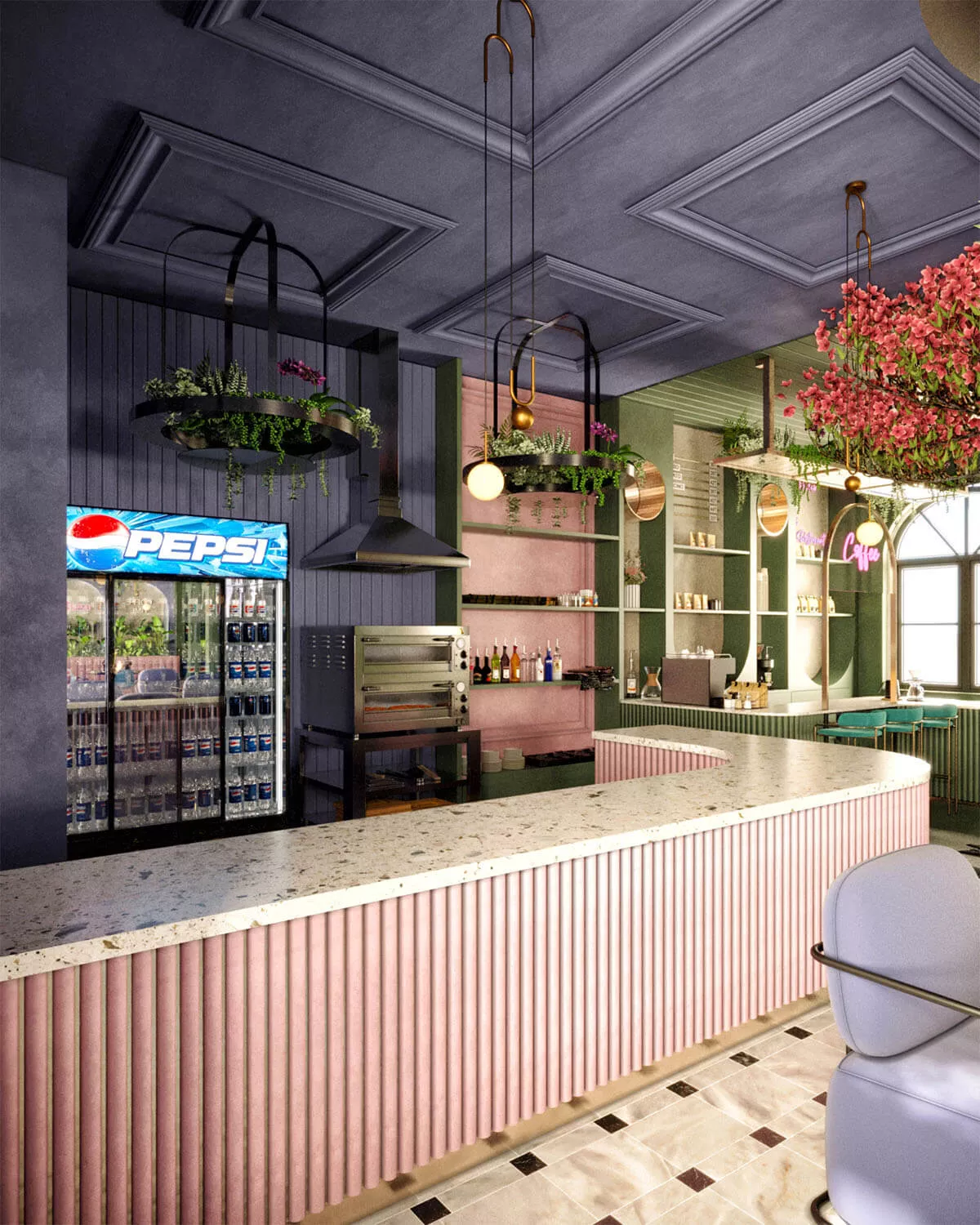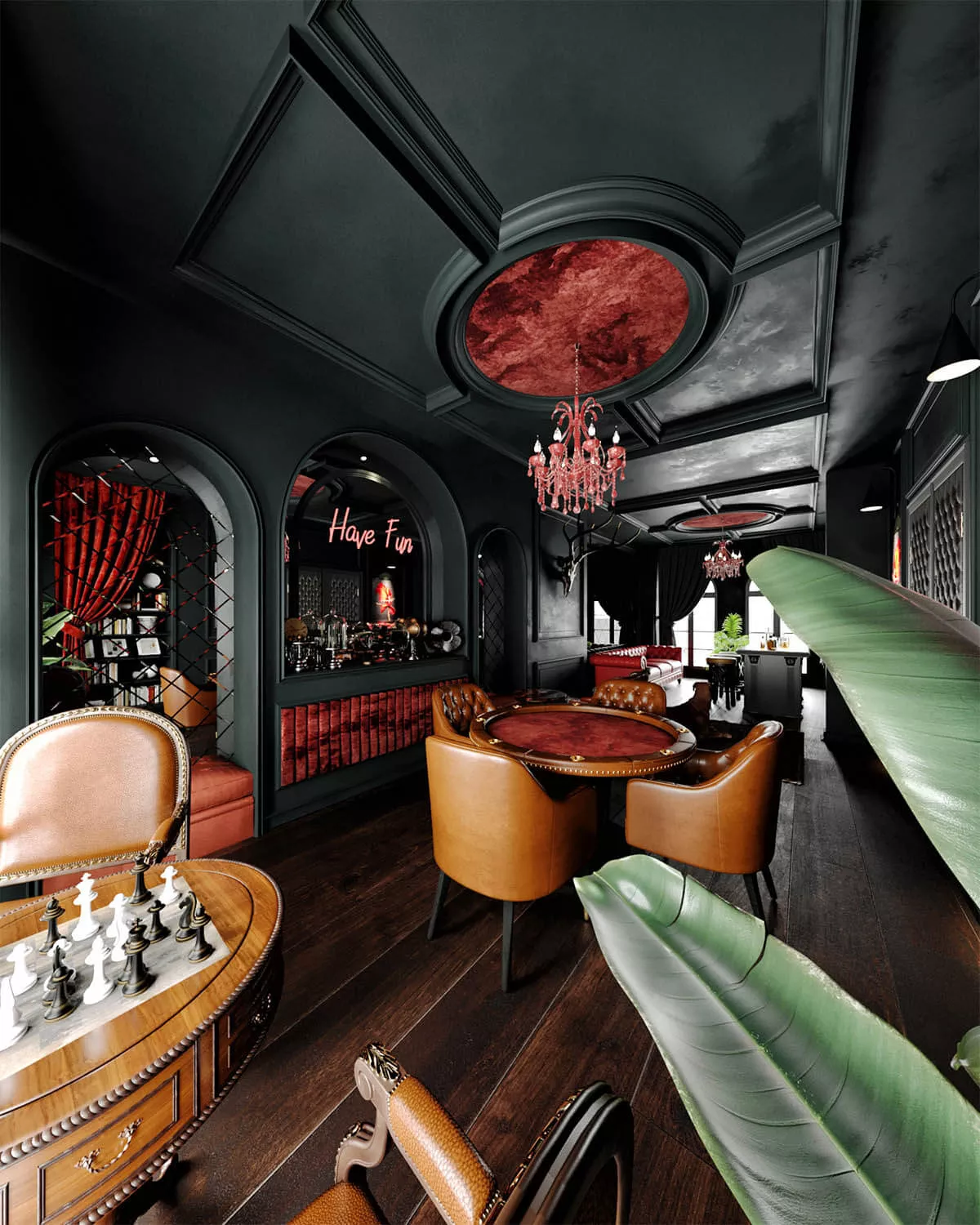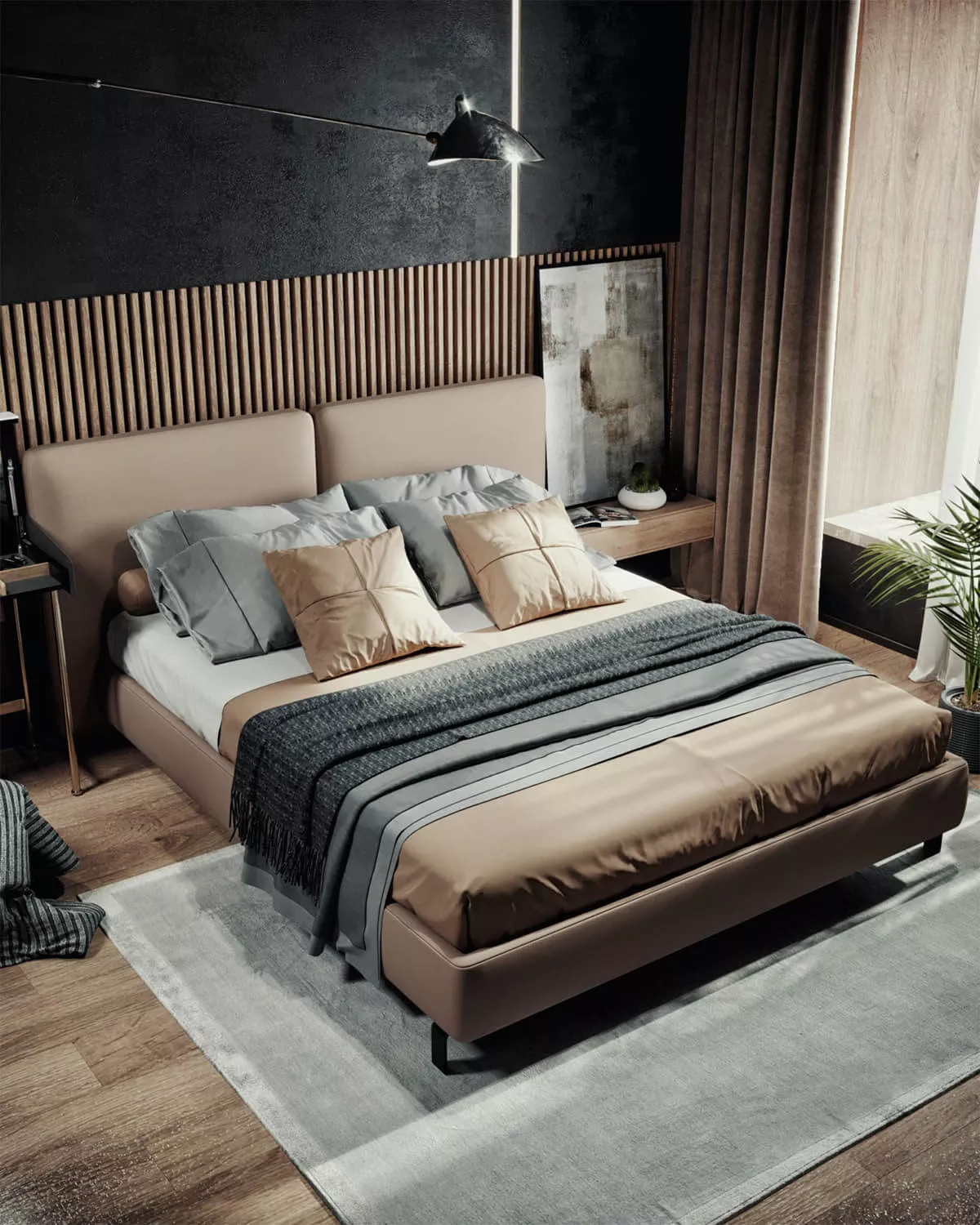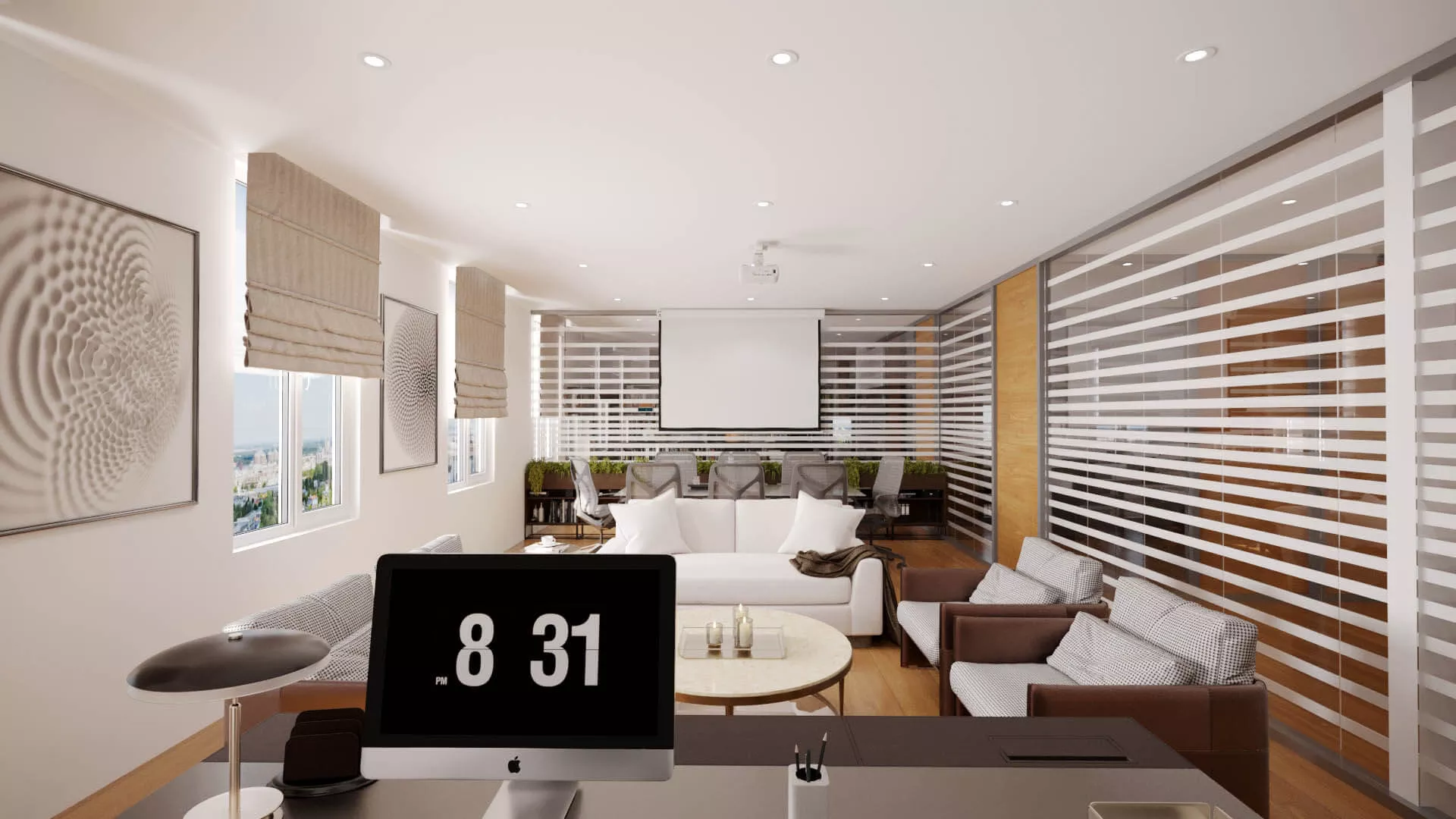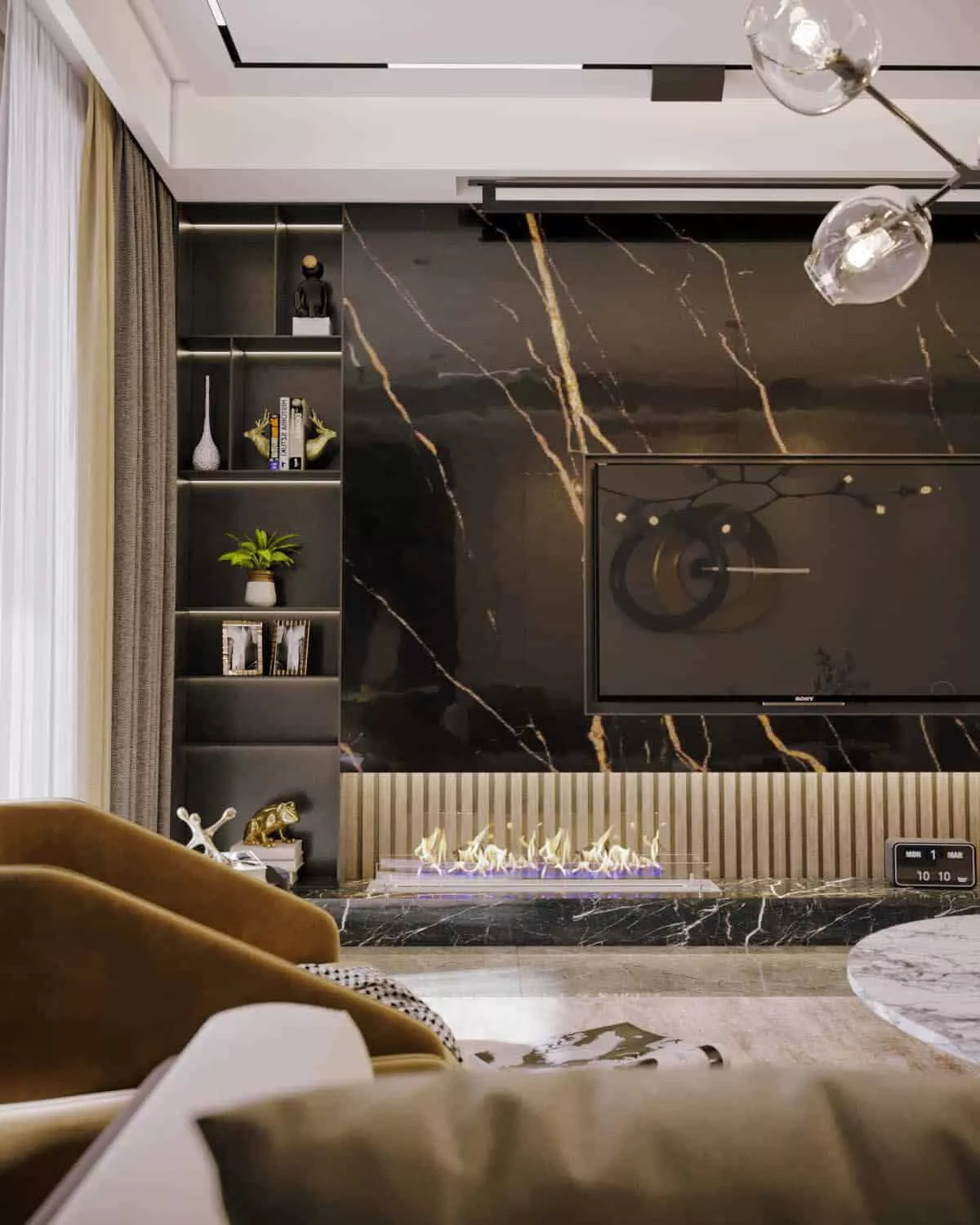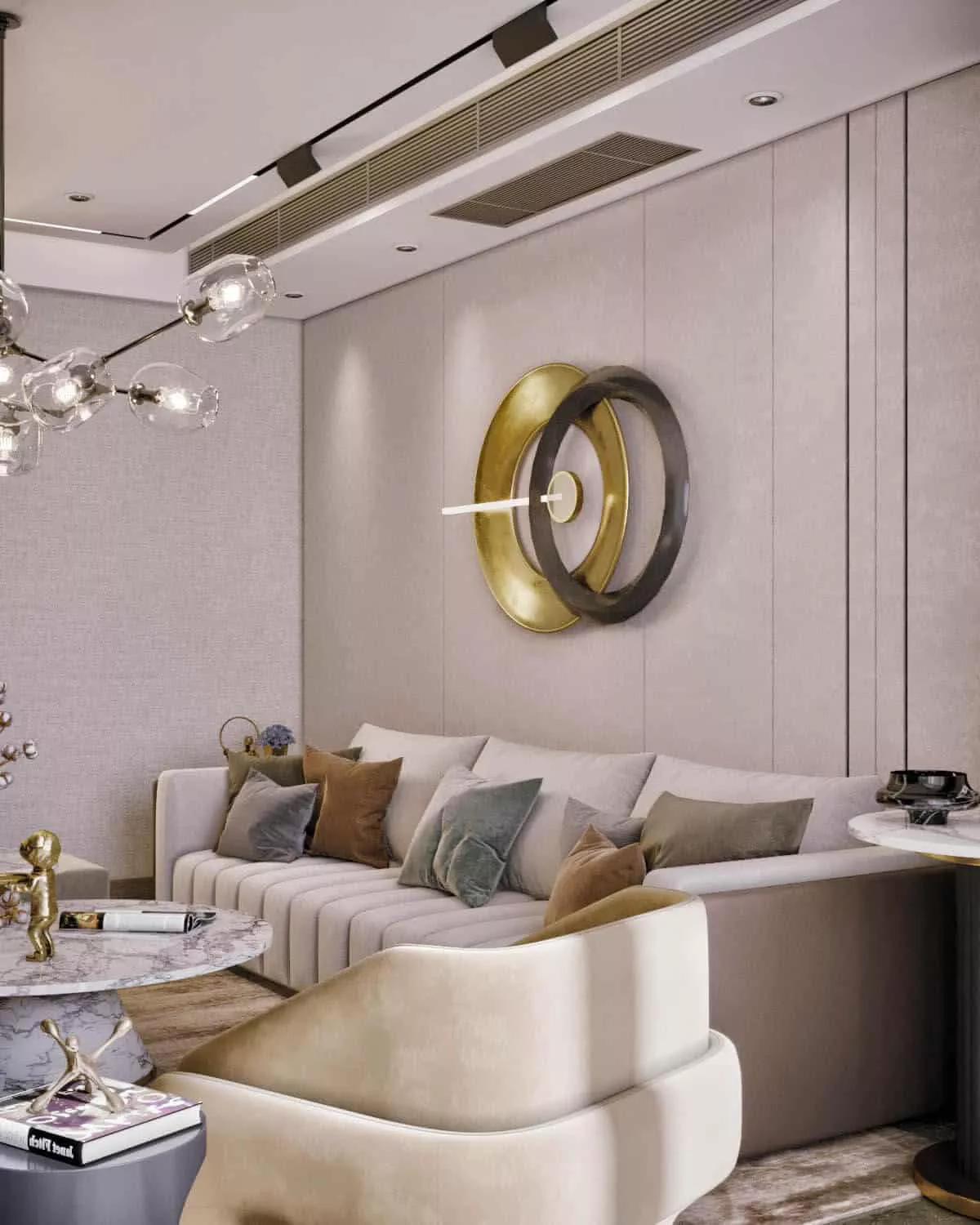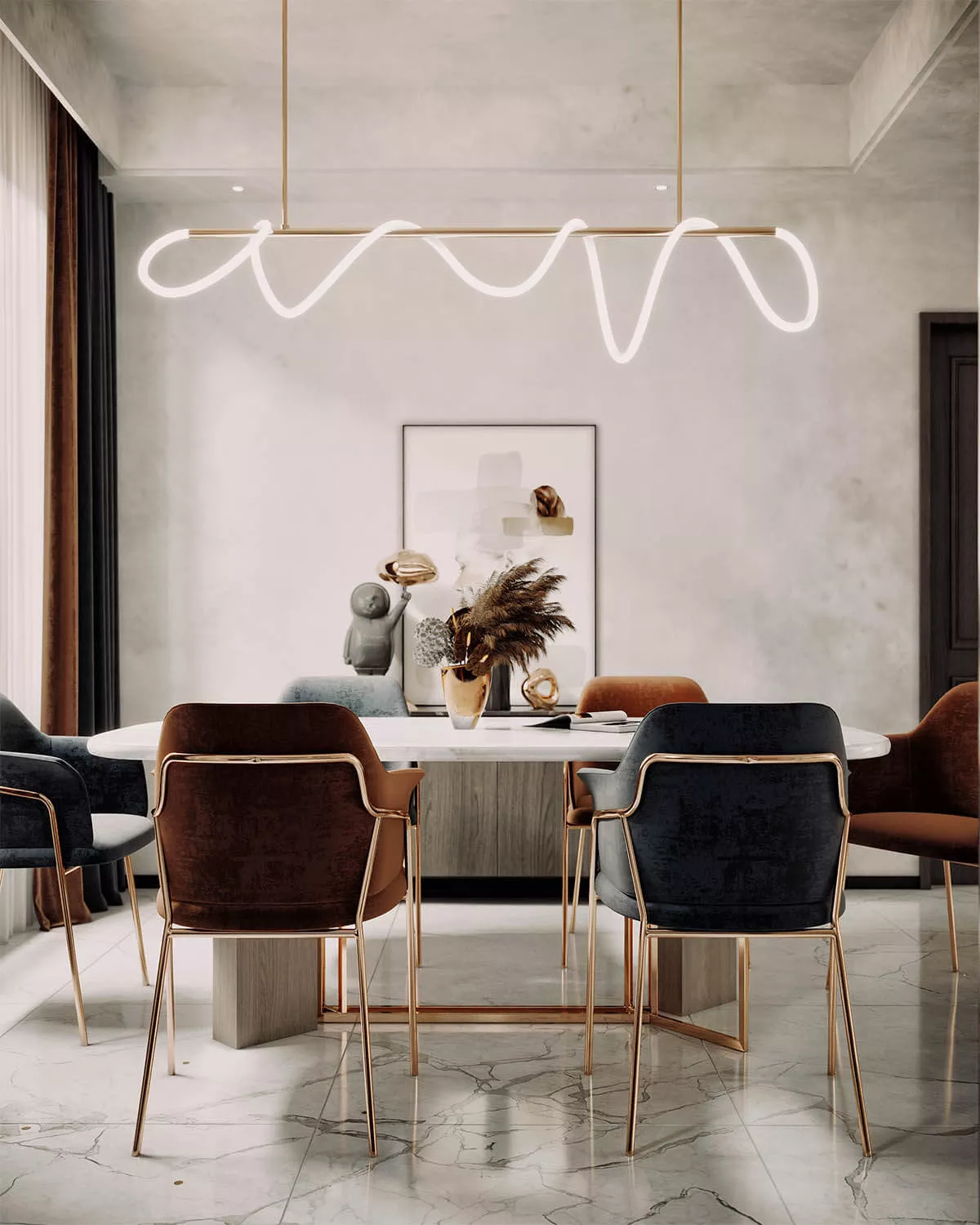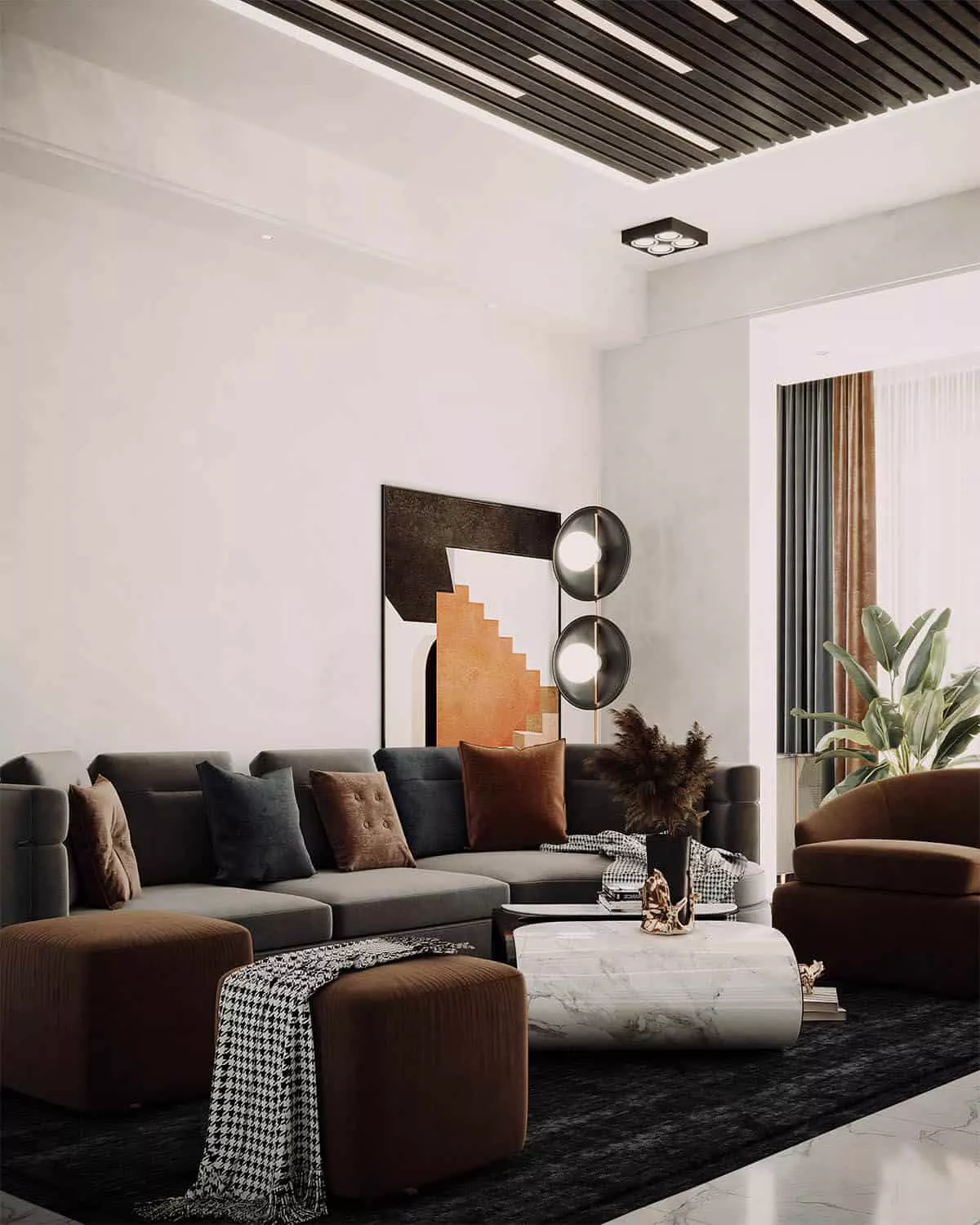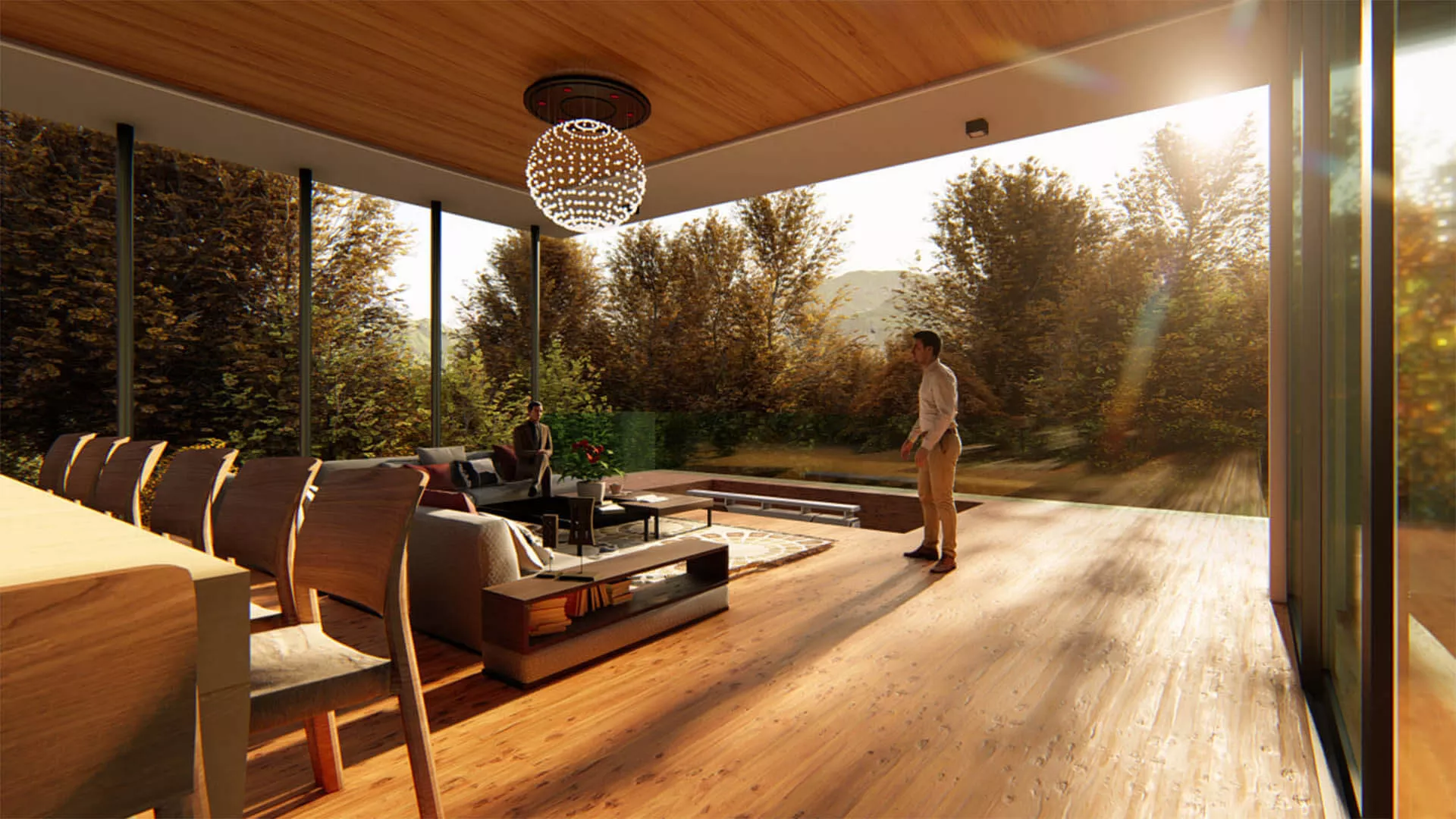
Interior Rendering Services USA — Photorealistic 3D Interior Visualization by RenderLand
When a client can see the room, not read about it, not imagine it, actually see it, they sign off. That moment of visual certainty is what interior rendering delivers, and it is what separates a design process that moves cleanly from one that stalls in revision cycles. RenderLand produces photorealistic 3D interior rendering services for interior designers seeking client approval before procurement, real estate developers marketing unbuilt apartments, and architects presenting spatial quality at competition and pitch stage. Not mood boards. Not schematic diagrams. Photorealistic interior visualization that shows the actual space, in the actual materials, under the actual light, before a single wall is painted or a single tile is laid.
Our interior rendering services USA clients span residential development, luxury custom home design, hospitality, retail, commercial office, and healthcare, nationwide, fully remote, with a production pipeline that accepts briefs from early design intent through to construction-issue drawings. If the quality of your interior imagery is deciding the outcome of a client sign-off, a pre-sale campaign, or an investor presentation, this is where to start.
Let's start a
conversation
Prefer to
talk directly?
Our experts are on hand to answer your questions and guide you to the right solution. No hold music, no bots.
What Is a 3D Interior Rendering Service?
A 3D interior rendering is a photorealistic, computer-generated still image of an interior space, produced entirely from architectural drawings, design specifications, and material references, before the space is physically built or styled. Everything in the image: the flooring, the wall finish, the furniture, the light falling across a countertop at a specific time of day, is generated by software, calibrated to your specifications, and output as a high-resolution image file.
Three formats are commonly confused with interior rendering, and each is a different product. Interior photography requires a built, finished, physically styled space, it is post-construction documentation, not pre-construction visualization. Virtual staging places CGI furniture over a real photograph of an empty room, useful for occupied-building marketing, but limited to the existing architecture and unable to represent design intent for an unbuilt space. Walkthrough animation produces a video sequence through a space rather than a still image, a different format for a different commercial purpose.
Interior rendering serves two primary contexts. The first is design communication: helping a client, planning board, or investor understand and approve a design before procurement commits to expensive finishes and custom furniture. The second is marketing production: creating listing-quality, advertising-ready interior imagery before construction completion. RenderLand produces studio-grade photorealistic interior CGI calibrated for both, accurate enough to serve as a specification tool, and polished enough to run in a marketing campaign without additional post-production.
| 3D Interior Rendering | Virtual Staging | Interior Photography | |
|---|---|---|---|
| Requires | Drawings / design data | Real photo of empty room | Built, styled space |
| Best for | Pre-construction design + marketing | Vacant property listings | Post-completion marketing |
| Design flexibility | Full — any material, any layout | Limited to existing architecture | None — documents what exists |
RenderLand offers both full interior rendering and virtual staging services. At brief stage, we advise on which format best serves your project's commercial purpose and timeline.
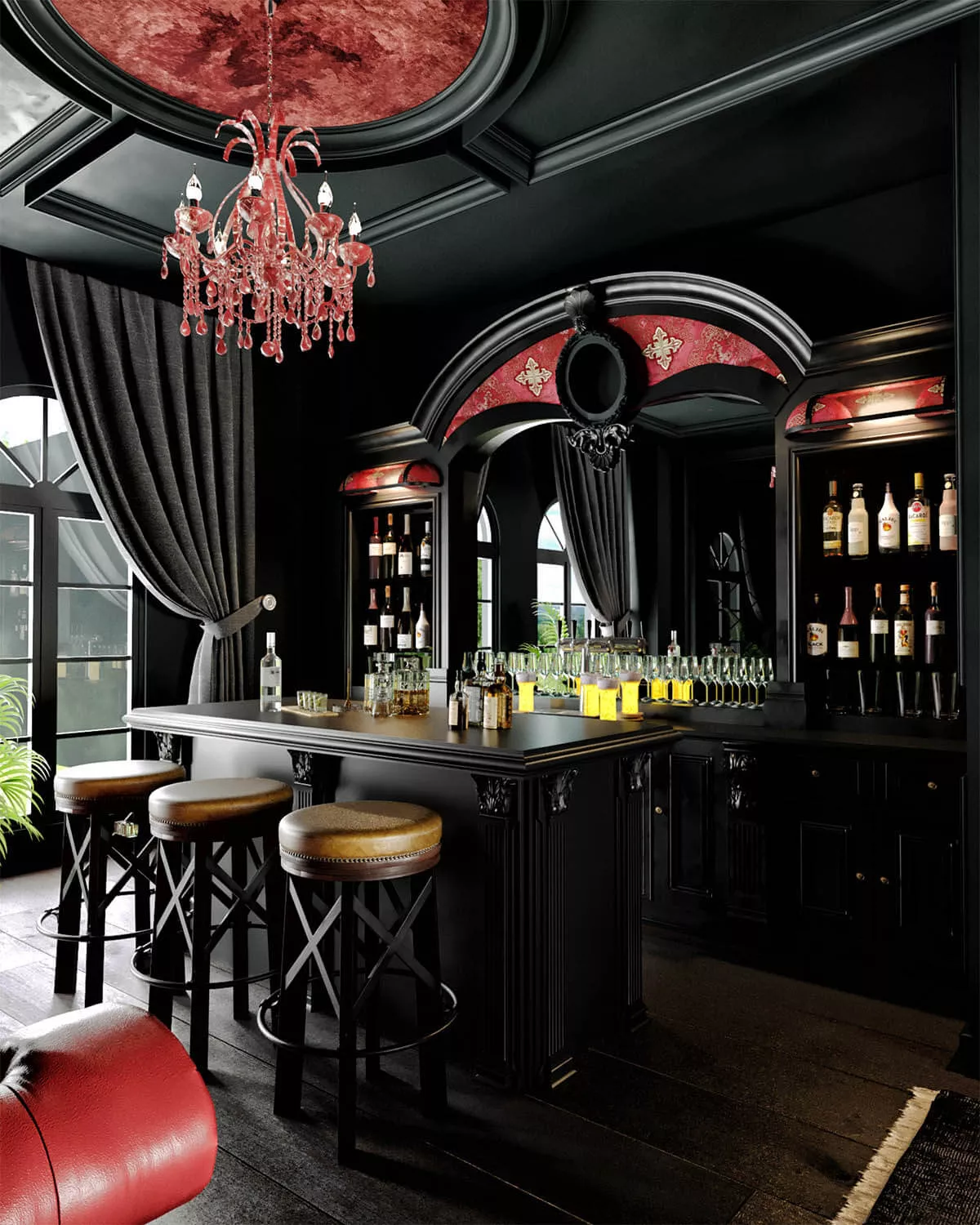
Single-room perspective renders are the standard deliverable, a camera positioned at human eye height showing the room's spatial character, material quality, and lighting mood. These are the workhorse of both design sign-off and marketing campaigns.
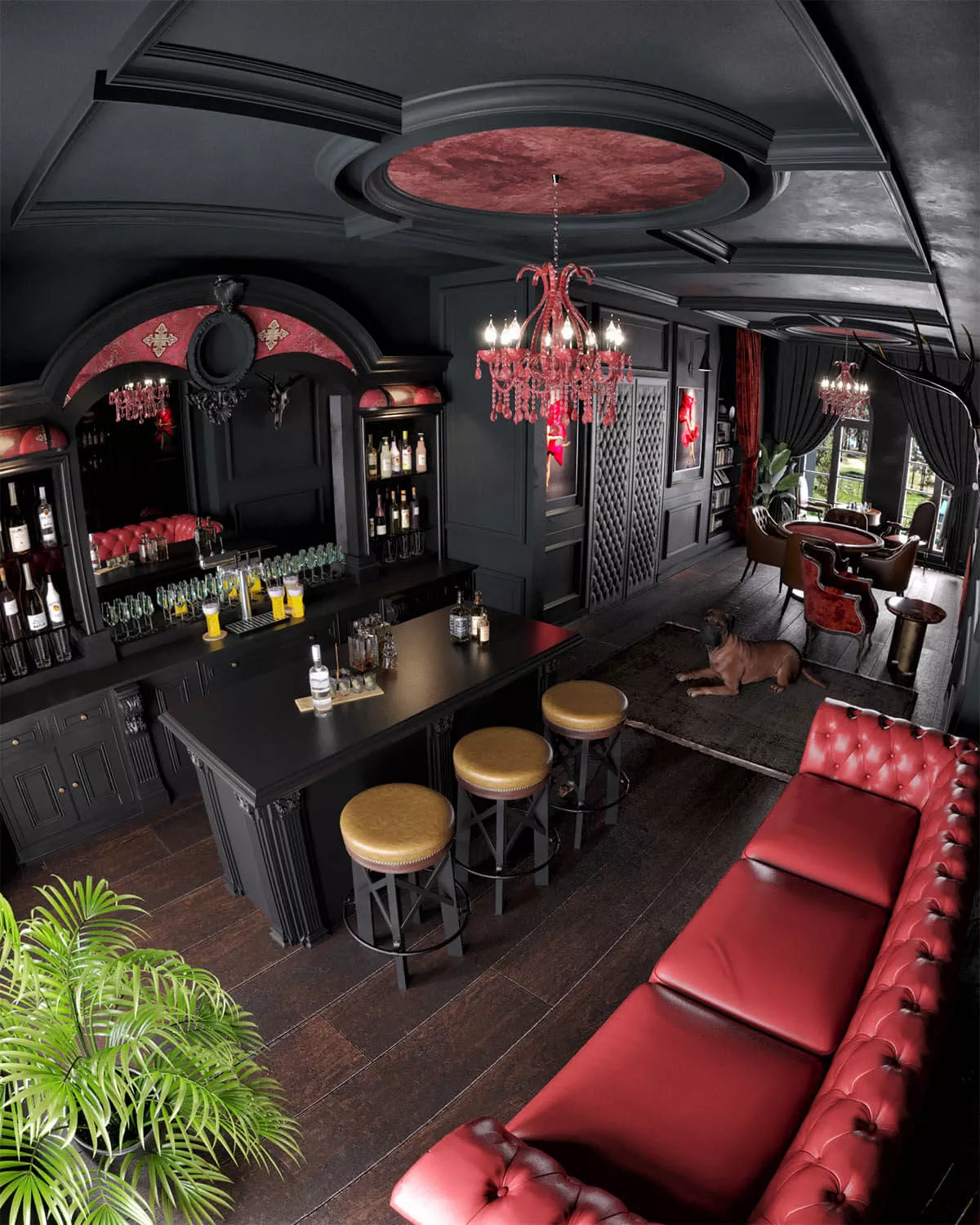
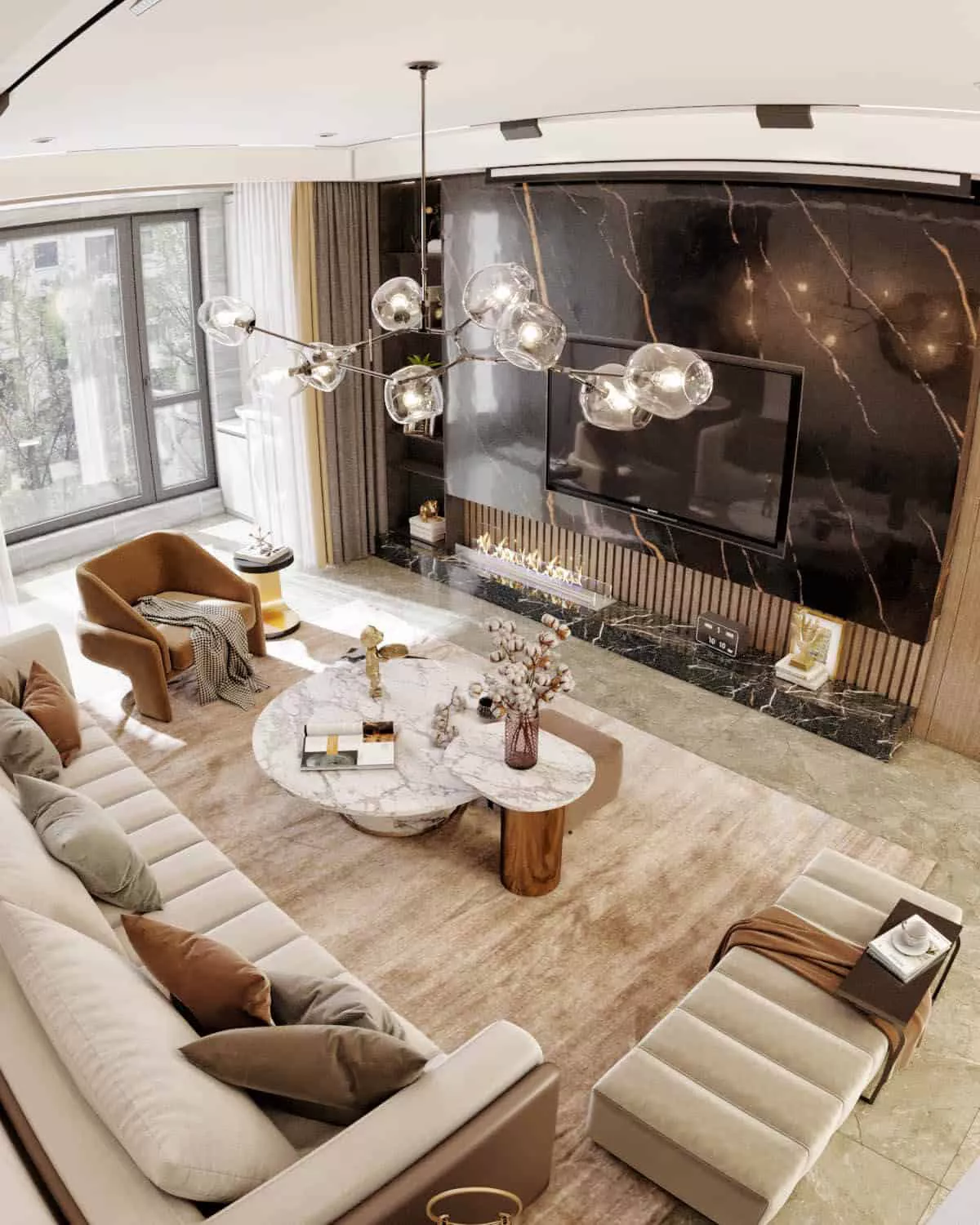
Wide-angle interior shots open the frame to capture multiple zones of an open-plan space, the kitchen flowing into a dining area, or a living room connecting to a terrace. Section perspective renders cut through the building to show vertical spatial relationships that a standard room-level view cannot convey. Overhead room plan renders show furniture arrangement and spatial flow from directly above, useful for communicating layout logic to clients who struggle to read floor plans.
Interior detail shots zoom to joinery, material junctions, lighting features, and finish quality at close range, the standard deliverable for interior designers presenting bespoke specification work. Multi-room project sets deliver a complete interior narrative across kitchen, bedroom, bathroom, and living spaces in a coordinated visual style. Material comparison side-by-side layouts render the same scene in two or three colorway options from a single scene build. FF&E visualization renders present furniture, fixture, and equipment selections in context, used by furniture brands and interior designers to communicate product specification before physical samples are available.
Why Photorealistic Interior Rendering Matters in Design, Real Estate, and Hospitality
The gap between what a design drawing communicates and what a client, investor, or buyer needs to see in order to make a confident decision is closed by interior rendering, and only by interior rendering. That gap has a real cost. It shows up as revision rounds after procurement has begun, as sales campaigns launched without interior imagery, as investor presentations that fail to communicate room quality, and as design fees consumed by client indecision that visualization could have resolved in a single meeting.
Photorealistic interior rendering is the production tool that closes that gap at three distinct decision-making moments: the design sign-off stage, the pre-sale marketing stage, and the investor and brand communication stage. Each context has a different buyer, a different decision, and a different commercial consequence, but all three require the same thing: an image that communicates what the space actually looks like before it is built.
Interior designers and architects lose time, and project fee, to revision cycles driven by client misunderstanding of drawn designs. The client was not dissatisfied with the design. They could not read it. A photorealistic interior render of the proposed room, at correct scale, in the specified materials, under the planned lighting conditions, closes the interpretive gap entirely.
Clients who can see the room approve it. Clients who can only read elevation drawings hesitate, ask whether the tile will look too dark, wonder if the sofa scale is right, and request changes after procurement commitments have already been made. Those late-stage changes are where project fees are eroded and relationships are strained. A render delivered before the specification is placed protects the designer's fee and the project programme, simultaneously. It is not a presentation tool. It is a sign-off tool.
Developers selling apartments before construction completion have no interior photography, because there is no interior to photograph. Floor plans alone do not generate reservations. What drives a buyer to place a deposit on an unbuilt apartment is their ability to picture themselves living in it, and that requires imagery of the kitchen, the master bedroom, the bathroom, and the living area at marketing-suite quality. Interior rendering enables earlier listing launches, longer pre-sale windows, and faster selldowns. Property listing platforms, social media advertising, and developer websites all favor high-quality interior imagery. A developer who launches a pre-construction sales campaign with photorealistic 3D interior renders occupies the same shelf as a completed show-home shoot, at a fraction of the timeline and cost.
Hotel operators evaluating a new property, restaurant groups designing a new location, and retail brands planning a flagship store all face the same challenge: communicating the proposed guest or customer experience to investors, franchise partners, and internal stakeholders before the space exists. A photorealistic render of a guest room communicates brand tier, material quality, and spatial experience in a way that a mood board or schematic plan cannot. A restaurant floor render shows cover count, service flow, and atmosphere simultaneously. A retail interior render communicates product display logic, customer journey, and brand environment in a single image. For hospitality and retail clients, interior rendering is investor and franchise communication material, not an add-on to the design process.
RenderLand's 3D Interior Rendering Production Process— Step by Step
First-time buyers of interior rendering services face a consistent set of uncertainties before commissioning: what files do I need, what happens if my brief is incomplete, what does a revision actually mean, and what does the final delivery look like? Every one of those uncertainties has a clear answer and understanding the process before you start is what protects your budget and your timeline.
Project Brief and Space Data Intake
You submit your spatial data, CAD floor plans (DWG or DXF), Revit (.rvt), SketchUp (.skp), ArchiCAD (.pln), or PDF plans and elevations. RenderLand reviews your files and confirms the full brief: which rooms and camera views are required, the desired lighting mood for each space (natural daylight, overcast, evening warm artificial, task lighting), furniture specifications (brand product references, custom-built pieces, or studio library selection), the full material palette (tile, flooring, wall finishes, joinery, soft furnishings), and resolution and delivery format requirements.
Production timeline, revision rounds, and milestone schedule are agreed in writing before work begins.
3D Modeling and Interior Scene Construction
Room geometry is built from your submitted drawings: walls, ceiling, floor, door and window openings, and structural elements modeled with dimensional accuracy. Custom joinery, built-in cabinetry, shelving, and architectural features are modeled to specification. Furniture is placed from brand product models, custom-built assets, or studio library references per the brief.
Decorative objects, artwork, plants, books, and lifestyle accessories are positioned to produce a scene that reads as lived-in and market-appropriate, not staged or sterile.
Material and Texture Application
PBR-calibrated materials are applied to every surface in the scene: flooring (timber, tile, carpet, stone, poured concrete), walls (paint, wallpaper, fabric cladding, architectural paneling), ceilings, joinery, countertops, and soft furnishings. Where product specifications and manufacturer references are provided, materials are matched to the real product, tile reference number, paint code, fabric swatch, stone finish.
IES photometric profiles are applied to every light fixture for physically accurate light distribution. Where the brief requires side-by-side material comparison, Colorway A versus Colorway B for a tile selection, two paint options on a feature wall, multiple material variants are prepared from a single scene.
Lighting Setup and Mood Direction
Natural lighting rigs are established with sun position calibrated to the room's orientation, the project's geographic location, and the chosen time of day and season. A south-facing kitchen at midday in a Miami apartment renders differently from a north-facing bedroom in a Seattle townhouse, and that accuracy matters for design sign-off.
Artificial lighting is set up using IES profiles for recessed downlights, pendant fixtures, wall sconces, under-cabinet LED strips, and architectural feature lighting. Multiple lighting scenarios are built per brief: morning natural light flooding through glazing, overcast diffuse interior, evening warm artificial with table lamps, and night-mode with full artificial lighting scheme active. HDRI environments control sky brightness and exterior color temperature visible through windows.
Camera Composition and Grey-Model Approval
Camera positions are set up per brief: standard eye-level perspective, wide-angle room shot, section perspective, overhead plan view, and detail close-up shots. Focal length, field of view, and depth of field are configured to simulate realistic lens behavior at the correct scale for each room type, a 24mm lens for a wide kitchen reveal, 35mm for a naturalistic bedroom perspective, 85mm for a joinery detail.
Before full production begins, a grey-model draft render is delivered for your review and approval. This is a flat-material, placeholder-lit render showing correct room geometry, furniture layout, camera angle, and spatial composition. Camera angle corrections and furniture repositioning happen at this stage, at no additional cost.
Full Rendering and Post-Production Compositing
Full-resolution rendering runs at 4K as standard, or 8K for print-ready briefs, via GPU render farm. The multi-pass pipeline produces separate beauty, shadow, reflection, Z-depth, and ambient occlusion passes, which are composited in Photoshop or Nuke for precise post-production control over individual image elements without re-rendering the full scene.
Sky and exterior views through windows are composited or replaced with appropriate environments. Lifestyle elements, fresh flowers, open books, soft morning light through sheer curtains, are added in post where the brief specifies. Color grading is applied in DaVinci Resolve or Photoshop: warmth, contrast, and saturation calibrated to match the mood brief. The first proof is delivered via a secure review link.
Client Review, Revisions, and Final Delivery
The first proof is delivered as a high-resolution JPEG via secure review link or as an annotated PDF for structured feedback. Client feedback is compiled into a consolidated revision brief, not a rolling stream of individual change requests, and revisions are completed within the agreed scope.
Final delivery package includes JPEG at web and listing resolution, PNG and TIFF for print production, layered PSD for clients who need to edit text overlays or crops in-house, and PDF compilation for planning submissions and investor pitch packs. Print-ready files are supplied at 300 DPI minimum for brochure and advertising. Raw scene files are available for future project updates on request.
Standard Final Delivery Package
Every RenderLand interior rendering project delivers a complete, channel-ready asset set. No extra production steps between delivery and use.
Let's start a
conversation
Prefer to
talk directly?
Our experts are on hand to answer your questions and guide you to the right solution. No hold music, no bots.
Interior Rendering by Room Type and Space — What RenderLand Visualizes
The visualization challenge is different for every room type, different materials, different lighting conditions, different buyer expectations for what the render needs to communicate. Here is the full range of spaces we render across residential and commercial projects.
Residential Interior Rendering — Rooms and Living Spaces
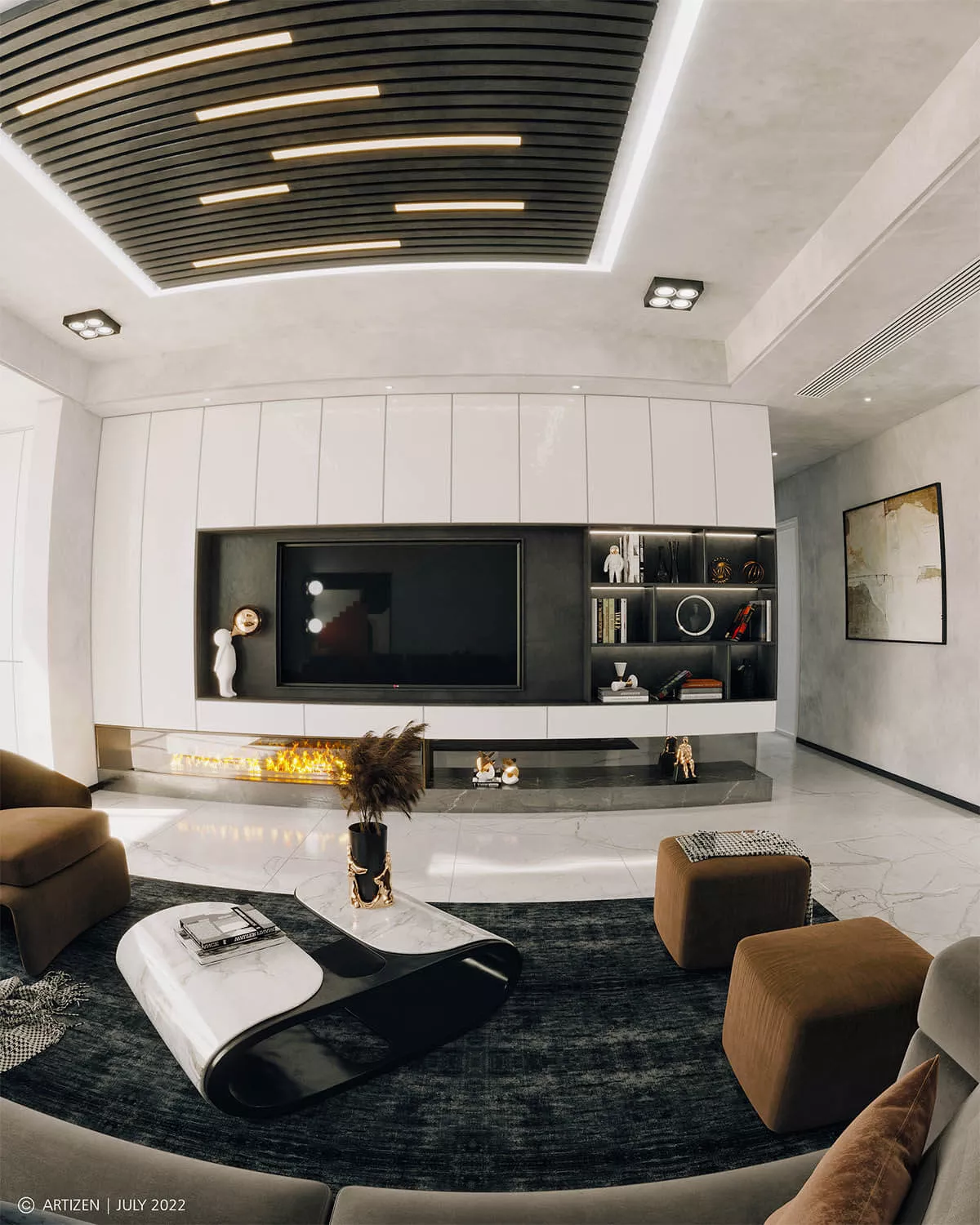
Living Rooms
Living rooms are among the most technically demanding residential renders. They require layered lighting, natural light from multiple windows interacting with artificial ambient and task lighting, combined with material richness across upholstery, rugs, timber, and stone. The challenge is making the space feel inhabited rather than staged, and lighting is the primary tool for achieving that.
Open-Plan Kitchen and Living Spaces
Open-plan kitchen and living spaces require accurate countertop, cabinetry, and appliance specification, the kitchen is the room where buyers most carefully evaluate material and finish quality. Countertop stone veining, cabinet door profile, appliance brand, and handle detail all carry commercial weight.
Master Bedroom
Master bedroom 3D rendering services must communicate soft furnishing texture, layered lighting atmosphere, and spatial generosity, the emotional tone of the room is as important as its material specification.
Bathroom Interior Rendering
Bathroom interior rendering is technically precise work: tile pattern, grout line, wet surface specularity, and sanitaryware fixture accuracy are all assessed by interior designers and buyers at close range.
Home Office and Dining Room
Home office and dining room renders complete a typical multi-room residential project set, with bespoke joinery detail shots delivered as supplementary images for designers presenting custom furniture and cabinetry.
Commercial, Hospitality, and Specialist Interior Rendering
Hotel Room 3D Visualization
Hotel room 3D visualization must communicate brand tier and guest experience simultaneously, the quality of bedlinen, the layering of bedside lighting, the material of the desk surface, and the view through the window all signal the property's market position to investors and franchise partners who have not visited the site.
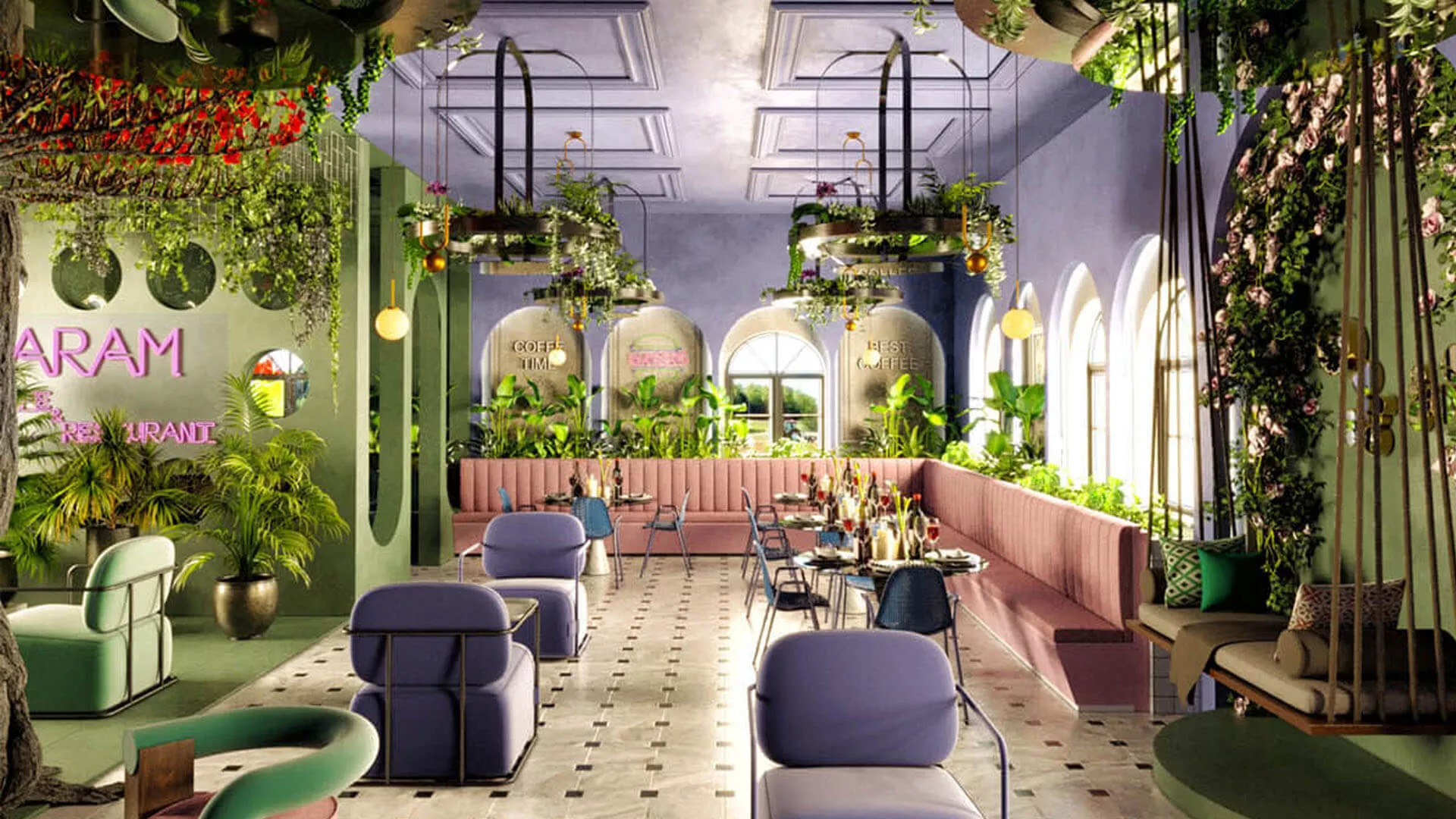
Restaurant Interior Rendering
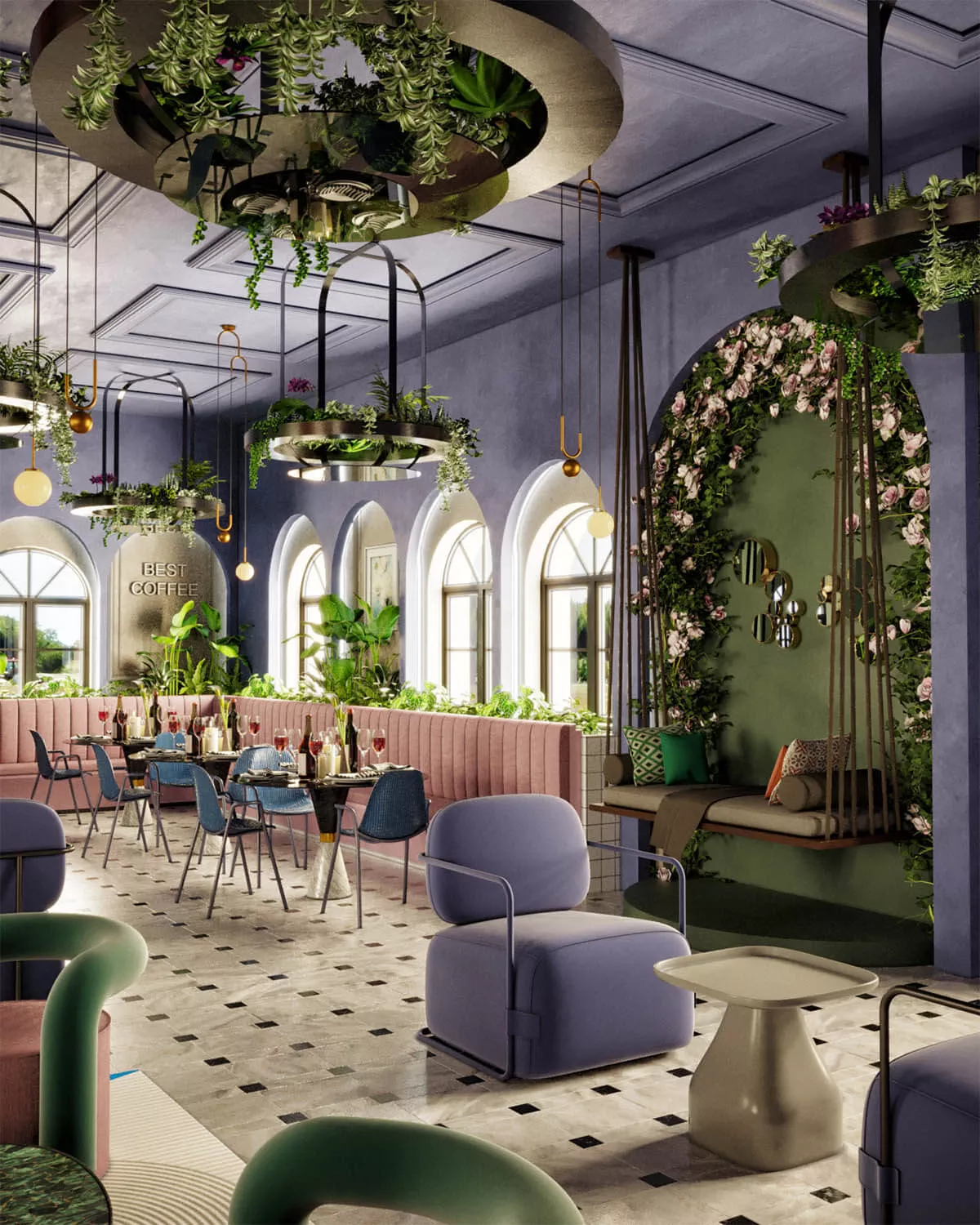
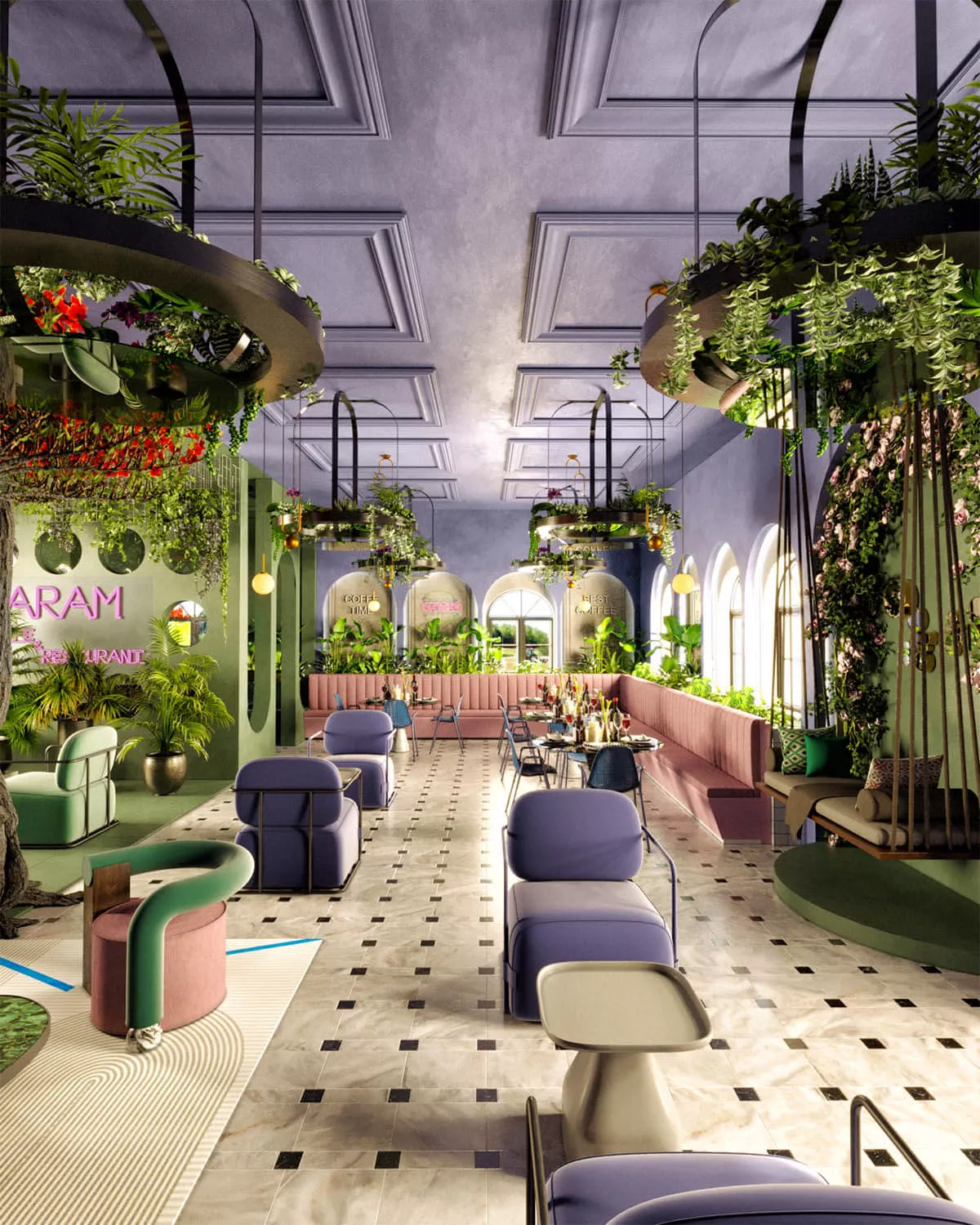
Restaurant interior rendering must balance atmosphere and operational logic, the render needs to show table spacing, lighting character, and brand environment while communicating service flow and cover count.
Lobby and Reception Interior Rendering
Lobby and reception interior rendering is the first interior image most investors and buyers encounter in a pitch pack, it sets the quality register for everything that follows.
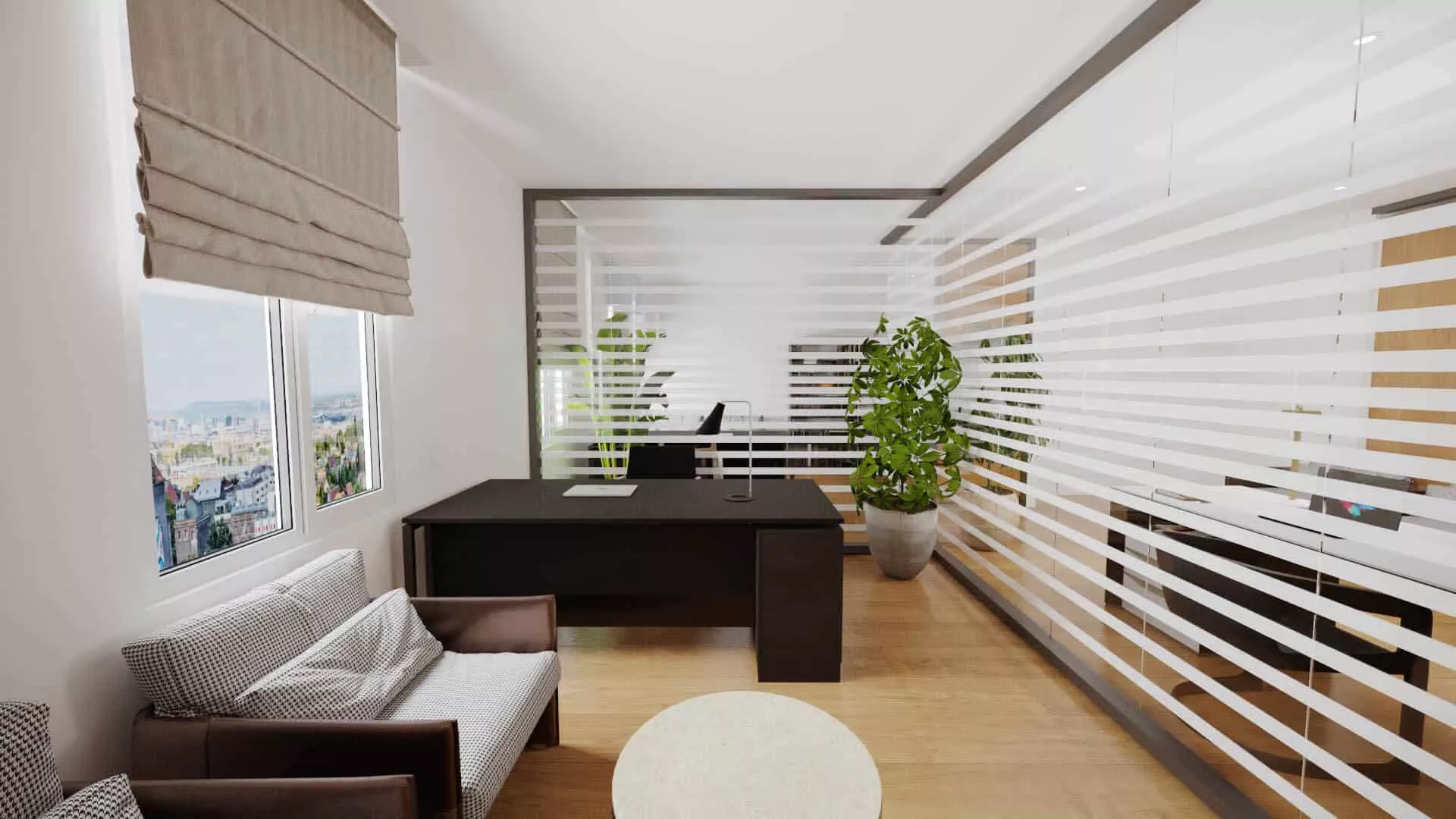
Office and Workplace Interior Rendering
Office and workplace interior rendering communicates spatial efficiency and workplace culture to corporate tenants and developers.
Retail Store Interior Rendering
Retail store interior rendering shows product display logic, customer journey, and brand environment in a single frame.
Healthcare and Clinical Interior Rendering
Healthcare and clinical interior rendering must communicate cleanliness, spatial clarity, and operational flow for planning submissions and board approvals.
Spa, Wellness, Co-Working, Institutional, and Senior Living
Spa and wellness interior rendering conveys atmosphere, material quality, and spatial calm, the emotional character of the guest experience is the commercial proposition. Co-working environments, institutional spaces including schools and civic buildings, and senior living interiors each have their own specific visualization requirements, and RenderLand produces renders calibrated to the commercial and approval purpose of each.
Every room type has a different visualization brief. RenderLand produces renders calibrated to the commercial and approval purpose of each space — residential or commercial, planning submission or investor pitch, marketing asset or design sign-off tool.
Technical Capabilities —RenderLand's Interior Rendering Quality Standards
Photorealistic interior rendering is a specific technical achievement, not a style setting. Here is what is behind the quality of the images we deliver, explained in terms of what it means for your specific project outcome.
Physically-Based Rendering, Global Illumination, and Material Accuracy
RenderLand's rendering pipeline is built on physically-based rendering (PBR) with Monte Carlo global illumination, the same rendering science used in feature film VFX. This means every surface interaction in the render is physically accurate: a marble countertop reflects light with the correct specularity for polished stone, a velvet sofa scatters light with accurate subsurface behavior, a glass partition transmits and refracts the exterior view with lens-accurate precision.
The practical result for the buyer is an image that a client or investor cannot distinguish from a photograph of a finished room. That visual certainty is what produces design sign-off and buyer confidence. For print and large-format applications, GPU-accelerated denoising via OptiX and OIDN delivers 4K and 8K output without grain or quality loss at commercial production timescales.
The same rendering science used in feature film VFX — applied to every interior render RenderLand delivers.
IES Lighting Accuracy and Mood-Precise Interior Illumination
Every artificial light fixture in a RenderLand interior render is driven by an IES photometric profile, the actual light distribution data published by the luminaire manufacturer. This is not a generic spotlight approximation. A Lutron recessed downlight casts the correct beam angle and falloff on the floor surface below. A Philips under-cabinet LED strip illuminates the countertop with the correct color temperature and horizontal spread. A bespoke pendant over a dining table creates the correct pool of warm light at the table surface and the correct ambient spill above.
For interior designers presenting a lighting scheme alongside a material specification, this level of accuracy is not a production detail, it is the difference between a render that validates the lighting design and one that merely decorates it. IES accuracy is also essential for renders used in LEED and energy performance documentation, where daylight modeling and artificial light distribution must match design specification.
The difference between a render that validates the lighting design and one that merely decorates it.
Camera Simulation, Depth of Field, and Compositional Direction
Every camera in a RenderLand interior render is configured as a real-world lens simulation. Focal length is selected for the specific visual purpose of each shot: 24mm wide for spatial storytelling in an open-plan space, 35mm for naturalistic room perspective, 85mm for material and joinery detail close-ups. Physically accurate depth of field draws the viewer's eye to the design moment being communicated, a sharp foreground material surface against a softly resolved background.
Composition is a director-level decision at every camera setup. Foreground object placement draws the eye into the frame. The mid-ground anchors spatial depth and furniture scale. The background establishes room scale and light quality. Section perspective and overhead views are used as compositional tools for communicating spatial flow, ceiling height transitions, and furniture arrangement logic that a standard eye-level perspective cannot convey.
Composition is a director-level decision at every camera setup — not a default setting applied uniformly.
Benefits of 3D Interior Rendering for Designers, Developers, and Marketers
Different buyers use interior rendering to solve different commercial problems. Here is what it specifically makes possible for each of the main client types we work with.
You use rendering primarily to secure client design approval before procurement begins, the moment at which project timelines and budgets become fixed commitments. A photorealistic render of the completed room, at specified materials, under accurate lighting, with furniture at correct scale, closes the gap between what you see in your design and what your client can understand from drawings or samples.
Fewer revision rounds. Faster sign-off. Higher client confidence at the procurement meeting. And a portfolio asset produced as a byproduct of the production process, imagery that represents the quality of your design thinking at its most compelling. At competition board and pitch deck stage, interior renders are shortlisting-critical. Jury members and prospective clients make quality assessments from images before they read specifications, and the render is the first thing they see.
You use interior rendering to sell apartments before they are built, attract equity capital before construction funding is drawn, and present investment-grade project quality to institutional partners who have not been to the site. A set of photorealistic interior renders, kitchen, master bedroom, bathroom, living area, produced to marketing suite standard enables earlier listing launches, higher-quality sales materials, and pre-sale reservation campaigns that reduce your carrying costs.
No other medium provides buyer-convincing interior imagery of a building that does not yet exist. A developer who launches with photorealistic 3D interior renders occupies the same competitive position as a developer with a completed show home, months or years earlier in the sales timeline. That earlier launch position is the commercial return on the render investment.
Your team needs interior imagery months before construction completes, for listing platforms, digital advertising, developer websites, and sales suite display walls. A RenderLand interior render set serves every channel from a single production investment: listing-optimized JPEG for Zillow and Realtor.com, social media crops in 1:1, 4:5, and 9:16 format for Instagram and Facebook advertising, print-ready TIFF for brochure production, and large-format files for sales suite wall display and hoarding.
One production run. Every channel served. No return visits to the studio for reformatting, no resolution compromises for large-format print, no format mismatches between the website and the advertising campaign. The render set is produced once and deployed everywhere.
Eight Problems 3D Interior Rendering Solves for Your Project
These are the situations that most commonly drive an interior rendering brief. If any of them describes your current project challenge, the render commission is the direct solution.
Most clients, even experienced property buyers and investors, cannot translate a set of floor plans and interior elevations into an accurate mental image of the finished space. They approve the plan and then express surprise at the result. Photorealistic 3D interior rendering eliminates that translation problem entirely. What you show them in the render is exactly what they are approving. No interpretation required, no misalignment possible between what the designer intended and what the client believed they agreed to.
A client who cannot visualize the finished room will not commit to an expensive specification. They ask for more time, request physical samples, suggest small changes that cascade through the design, and delay the procurement window. Every week of delayed procurement is a week of project programme risk. A photorealistic interior render delivered at the sign-off presentation gives the client the visual certainty to commit, and removes the most common source of pre-procurement delay from the design process.
A pre-construction sales campaign with no interior imagery is a campaign running at a material disadvantage. Buyers evaluating apartments online compare listings side by side, and a listing with photorealistic interior renders consistently outperforms one with floor plans and a site hoarding photograph. RenderLand delivers marketing-suite quality interior renders before a single internal wall is built, enabling campaign launches timed to market demand rather than construction progress.
Presenting two tile options, three paint colorways, or alternative joinery finishes through physical samples requires procurement time, shipping costs, and a client meeting to evaluate materials that may not end up being selected. Interior rendering allows the same design scene to be rendered in multiple material variants from a single scene build, side-by-side comparison layouts delivered digitally, reviewed remotely, and decided without physical samples being sourced or transported.
A hotel operator presenting a new property to a management company, or a restaurant group pitching a new location to franchise partners, needs to communicate spatial quality and brand tier with specificity. Mood boards communicate references, not outcomes. Photorealistic hotel room, restaurant floor, and lobby interior renders show the actual spatial experience the brand is promising, at the quality level the investment warrants. RenderLand delivers hospitality interior rendering calibrated to investor presentation and franchise communication standards.
Empty rooms photograph poorly and list poorly. A vacant apartment shown through photography reads as an empty box, scale is ambiguous, spatial quality is invisible, and the buyer cannot engage emotionally with the space. Interior rendering, whether full CGI for an unbuilt property or virtual staging for a vacant one, transforms the listing from a technical record of dimensions into a visual experience of the home. Properties with high-quality interior imagery outperform comparable listings without it across all major listing platforms.
Architecture firms competing for interiors commissions are evaluated on the quality of their submitted imagery at shortlisting stage, before a committee member reads a single line of the design rationale. A set of photorealistic interior renders in a competition entry communicates design intent, material ambition, and spatial quality with immediate visual authority. A set of rendered floor plans and elevations does not. The render is what gets you to the next round.
Furniture manufacturers, kitchen and bathroom brands, and lighting companies need lifestyle imagery that shows their products in realistic interior environments, but physical shoots require a real set, a styled room, a photographer, and a post-production team. Interior rendering places a brand's exact product specification in a photorealistic room environment without a physical set or a shoot day. Product model accuracy, material fidelity, and lighting calibration produce imagery that performs across e-commerce, print, and advertising channels.
If one of these problems matches your current project, we can scope the right interior rendering package for your brief and timeline. Start with the portfolio or contact us directly.
Industries RenderLand Serves with Interior Rendering Services
Interior rendering is commercially relevant wherever a space needs to be understood, by a client, an investor, a buyer, or a planning authority, before it is physically built or refitted. Here is the range of sectors we work across.
Residential, Property Development, and Real Estate
Residential real estate development is the highest-volume interior rendering context in the US market. Pre-sale apartment campaigns, multi-family and condominium development marketing, and single-family luxury custom home presentations all depend on interior renders to drive buyer decisions before construction completes. Luxury custom home designers and interior design firms use interior rendering for client design sign-off and portfolio development.
Real estate marketing agencies use interior renders as the lead content asset for property launch campaigns, covering listing platforms, social media advertising, and developer microsite imagery from a single production run. Property management companies and REITs use renders for refurbishment project approvals and investor reporting. Vacation rental and short-stay operators use rendering to market properties before fit-out is complete, enabling advance booking campaigns timed to seasonal demand.
Commercial, Hospitality, and Product Industries
Interior design studios and architecture firms use rendering as a client communication and portfolio tool across every project type. Hospitality clients, hotels, resorts, branded residences, and spas, use interior rendering for pre-opening investor materials, franchise partner presentations, and pre-launch marketing campaigns. Restaurant and food service groups use interior renders for franchise documentation, investor decks, and planning submissions where spatial experience evidence is required.
Retail and commercial interior clients use rendering for store design presentations, tenant fit-out approval, and pre-launch marketing. Healthcare and clinical interior clients use rendering for planning authority submissions and board approvals. Corporate office and workplace designers use renders for tenant presentations and design development sign-off. Senior living and assisted care developers use renders for family decision-maker communications and planning submissions. Furniture and homewares brands, kitchen and bathroom manufacturers, lighting design firms, and flooring and surface material companies all use interior rendering to produce lifestyle and specification imagery without the cost and logistics of a physical shoot.
Why Clients Choose RenderLand for Interior Rendering
Every visualization studio promises quality and turnaround. Here is what specifically differentiates RenderLand for buyers who have worked with other studios and know what to look for.
Material and Lighting Accuracy That Functions as a Specification Tool
The distinguishing characteristic of a RenderLand interior render is not its visual polish, it is its accuracy. PBR materials calibrated to manufacturer references, IES photometric profiles matched to specified fixtures, and sun position calculated for the room's actual geographic orientation mean that the render shows the designer and the client exactly how the space will look under the planned lighting scheme, with the planned materials, at the planned time of day.
A Production Process Designed Around Design and Development Timelines
Grey-model approval is standard on every project at no additional cost. Brief flexibility runs from concept sketches through to construction-issue drawings. Revision scope is agreed in writing before production begins. Milestone-based delivery fits into a development programme or a design project's procurement timeline, not the studio's production convenience.
Let's start a
conversation
Prefer to
talk directly?
Our experts are on hand to answer your questions and guide you to the right solution. No hold music, no bots.
How Interior Rendering Improves Design Approvals and Property Marketing
Interior rendering is a project investment. The return on that investment concentrates at two specific points in a project lifecycle: design approval and property marketing.
Interior Rendering Software and Technology — RenderLand's Production Stack
Our technology stack is selected for the specific requirements of each project brief, not applied uniformly. Here is what we use, and what each tool contributes to the quality of your render.
3D Modeling and BIM File Compatibility
RenderLand accepts native files from the full range of architectural and interior design software in current US practice. Autodesk Revit (.rvt and .ifc) is the primary BIM intake format for commercial, institutional, and large-scale residential projects, geometry, material assignments, and room data are imported directly, preserving dimensional accuracy and reducing translation risk.
AutoCAD (.dwg and .dxf) files are converted from 2D plan and elevation geometry to full 3D scene geometry during production. SketchUp Pro (.skp) files are accepted for concept-stage and early design model intake. Rhino 3D (.3dm) supports complex curved geometry and parametric surface work. ArchiCAD (.pln and .ifc) provides full BIM workflow integration for Graphisoft-based practices. 3ds Max and Blender are used for advanced scene construction, custom furniture modeling, and complex joinery geometry. Direct model import across all formats preserves dimensional accuracy, reduces translation errors, and shortens production lead time.
Rendering Engines and Real-Time Visualization
V-Ray and Corona Renderer are used for production-grade offline rendering where benchmark photorealism is the standard, these engines deliver the material accuracy and lighting fidelity required for design sign-off and marketing deployment. Unreal Engine 5 with Lumen global illumination supports real-time interior visualization for live client design review sessions and downstream VR applications.
Lumion, Enscape, D5 Render, and Twinmotion provide rapid visualization capability at early design stages, with direct BIM connectivity for fast-turnaround projects where photographic benchmark quality is not the primary requirement. Octane Render, Redshift, Arnold, and Cycles serve specialist pipeline requirements including complex light transport, subsurface scattering, and volumetric interior atmosphere. RenderLand selects the appropriate engine for each brief, the buyer does not need to specify.
RenderLand selects the appropriate engine for each brief — the buyer does not need to specify.
Material Libraries, Asset Resources, and Lighting Data
Quixel Megascans and Substance Painter provide the physically-based surface material library used for accurate tile, stone, timber, fabric, and metal surface rendering. Chaos Cosmos, PolyHaven, Maxtree, Evermotion, VIZPARK, and 3D Sky provide the furniture, plant, decorative object, and environmental asset libraries used to populate interior scenes without custom model builds for most standard brief requirements.
IES photometric profiles from major luminaire manufacturers, Lutron, Philips, Zumtobel, and custom fixture suppliers, drive artificial lighting accuracy. HDRI Haven environments provide calibrated exterior sky and ambient lighting data for window views and daylight simulation. The breadth of asset library access means furniture brand accuracy and material specification fidelity are achievable at standard production cost for the majority of interior briefs.
Furniture brand accuracy and material specification fidelity are achievable at standard production cost for the majority of interior briefs.
Post-Production and Cloud Rendering Infrastructure
Post-production uses Adobe Photoshop for multi-pass compositing and layered PSD delivery, Adobe Lightroom for batch color processing across multi-room project image sets, DaVinci Resolve for color-science-grade grading, and Nuke for deep compositing on high-fidelity multi-pass scenes. GPU render farm infrastructure via Chaos Cloud, GarageFarm, RebusFarm, Fox Renderfarm, and AWS Deadline Cloud makes 4K and 8K output commercially viable within standard project programme windows.
Desktop rendering of a multi-room project set at 8K print resolution would be measured in days per image, render farm infrastructure brings that to hours.
Render farm infrastructure reduces 8K multi-room output from days to hours — commercially viable within standard project programme windows.
Frequently Asked Questions — Interior Rendering Services
-
Pricing is driven by five primary factors: the number of rooms and camera views required, the complexity of furniture specification (standard library assets versus custom-modeled brand pieces), the level of material specification detail, the number of lighting scenarios required per room, and the post-production scope (basic delivery versus lifestyle compositing and multi-format crops). As a directional guide: a single-room perspective render with a standard brief typically starts in the $400–$900 range. A multi-room project set of four to six rooms for a pre-construction marketing campaign runs $2,500–$6,000. A full development marketing interior package with multiple lighting scenarios and multi-format delivery starts from $8,000. A project-specific quote is provided after brief review, but those ranges should help you assess whether to proceed to inquiry.
-
A single-room perspective render with a clear brief and standard specification typically takes three to five business days from brief confirmation to first proof. A multi-room project set for a pre-construction marketing campaign runs seven to fourteen business days. Projects requiring custom furniture modeling, multiple lighting scenarios, or extensive post-production compositing extend timelines accordingly. The milestone structure, brief intake and grey-model approval, full rendering, post-production, first proof, revision, and final delivery, is where production time is distributed. Grey-model approval typically adds one to two days but protects the entire production run from camera and layout revision costs.
-
We accept Revit (.rvt), AutoCAD (.dwg and .dxf), SketchUp (.skp), ArchiCAD (.pln), Rhino (.3dm), IFC files, PDF plans and elevations, and hand-drawn or early-stage concept sketches. Construction-ready drawings are not required to begin. Supplementary materials that accelerate production quality include material specification sheets, furniture brand product references and model numbers, finish samples or digital swatches, the lighting scheme with fixture references, and reference images for the desired render mood. The brief intake process identifies exactly what is needed for your specific project scope.
-
Yes, and this is one of the most commercially valuable capabilities of interior rendering versus interior photography. Once the 3D scene is fully built and lit for a first camera view and lighting scenario, rendering the same room in an alternative lighting mood (morning natural versus evening warm artificial) or an alternative material colorway (Colorway A versus Colorway B for a tile or paint selection) requires scene adjustment rather than full rebuild. Multiple lighting scenarios and material variants are priced as scene increments, significantly less than separate render commissions. A physical room cannot be re-lit or re-finished without physical cost. A 3D scene can.
-
Yes. Where the manufacturer or brand provides a 3D product model, which most major furniture brands make available on request, RenderLand places the exact specified product in the scene with accurate scale, material, and finish. Where brand models are not available, RenderLand custom-models to specification from product photography and specification sheets. Material and fabric accuracy is achieved through PBR material calibration from manufacturer swatches, digital color references, and finish descriptions. This specification-level accuracy is what allows interior renders to replace physical sample presentations at client sign-off meetings.
-
Yes, grey-model approval is standard on every project at no additional cost. A grey-model draft is a flat-material, simplified-lighting render showing the room geometry, camera angle, furniture layout, and spatial composition accurately, without the production-quality material and lighting pass. Camera angle corrections and furniture repositioning happen at the grey-model stage, at zero revision cost. Changes after grey-model approval and after full rendering has begun carry a production cost. The grey-model milestone is specifically designed to protect your budget at the most cost-sensitive point in the production timeline.
-
Standard delivery is 4K JPEG optimized for web, listing platforms, and digital advertising. Print-ready delivery is 8K TIFF or PNG at 300 DPI minimum for brochure, advertising, and large-format print. Layered PSD files are available for clients who need to edit text overlays, staging adjustments, or aspect ratio crops in-house without a new render. PDF compilation is produced for planning submissions and investor pitch packs. Social media crops at 1:1, 4:5, and 9:16 platform-optimized resolution are included as part of the standard delivery set. All formats are produced from the same render pass, multi-format delivery requires no additional rendering.
-
Yes. The 3D scene built for a still interior render is the same asset base used for walkthrough animation production. Commissioning animation at the same time as still renders uses the existing scene and delivers a significant cost efficiency compared to a separate animation brief built from scratch. If animation is a likely future requirement, flagging this at the brief stage allows the modeling pipeline to be structured for animation output: camera rigs, scene optimization, and material complexity are all calibrated with animation production in mind from the start.
-
Yes, with context. Raw scene files, in .max, .blend, Cinema 4D, or engine-native format depending on the production pipeline used, are available for handover at an agreed additional cost that reflects the value of the fully built and lit scene asset for future project updates, animation production, or VR development. Layered PSD files from post-production compositing are available as standard on request for clients who need to adapt image treatments in-house. Raw scene handover pricing and format are agreed at brief stage, not after delivery.
-
Yes, explicitly and without qualification. RenderLand interior renders are produced at commercial production quality and delivered in formats native to every distribution channel. Web-optimized JPEG for Zillow, Realtor.com, and comparable listing platforms. Print-ready TIFF for brochure and advertising production. Social media crops for Instagram, Facebook, and LinkedIn paid campaigns. Large-format files for sales suite display walls and hoarding panels. A commercial use license for marketing deployment is included as standard in every delivery, there is no additional licensing fee for running RenderLand renders in your paid advertising campaigns.
Request a Quote from RenderLand
Commission Your Interior Rendering Project
RenderLand produces photorealistic 3D interior renders that give interior designers client approval before procurement, developers the marketing imagery to sell before construction, and hospitality brands the investor materials to close a deal before a room is fitted. That is the service. That is the commercial outcome it delivers.
Submitting a brief gets you three things: a structured brief review from a team that reads floor plans, understands FF&E schedules, and knows the difference between a render for a planning submission and one for a luxury marketing brochure; a production timeline built around your project deadline; and a project-specific price proposal with no obligation to proceed. Upload a floor plan, share a reference link, or book a 20-minute discovery call. We respond to all project enquiries within 24 to 48 business hours.
Project quotes returned within 24–48 business hours. All file formats accepted.
Studio: RenderLand, Interior Rendering Services | United States | Fully Remote Production
Let's start a
conversation
Prefer to
talk directly?
Our experts are on hand to answer your questions and guide you to the right solution. No hold music, no bots.