RenderLand

Aerial Visualization — United States

3D Aerial View Rendering Services USA

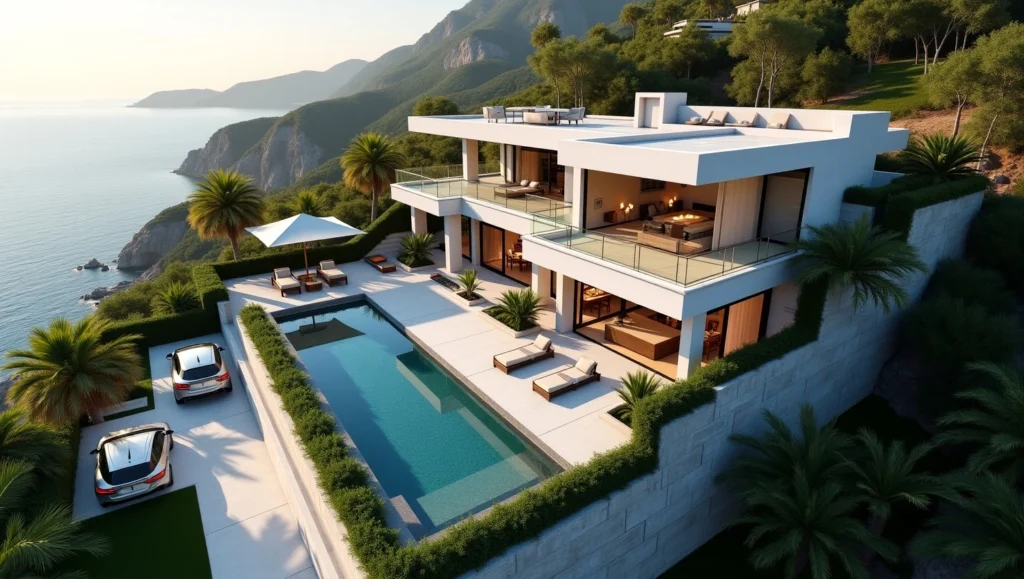
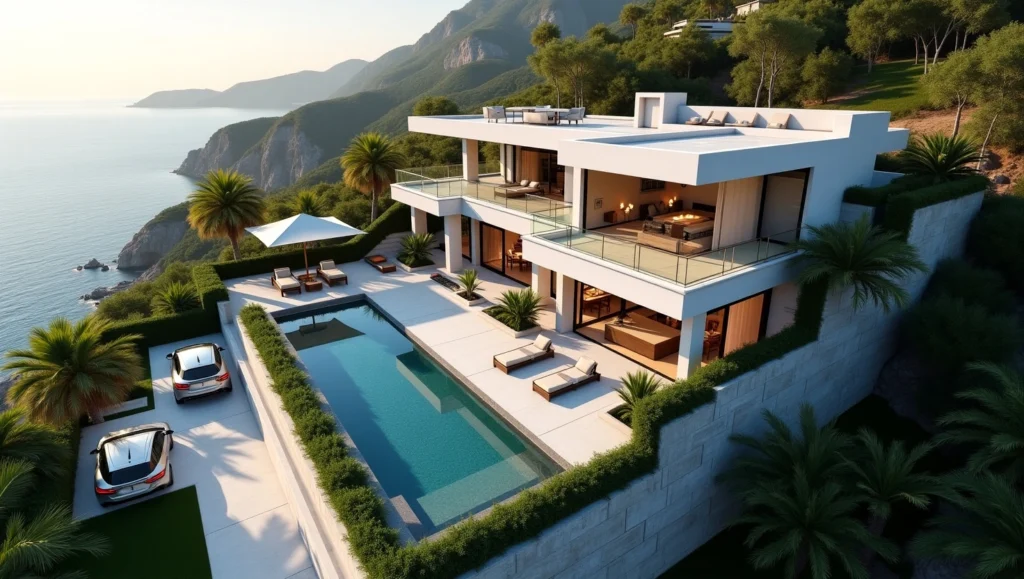
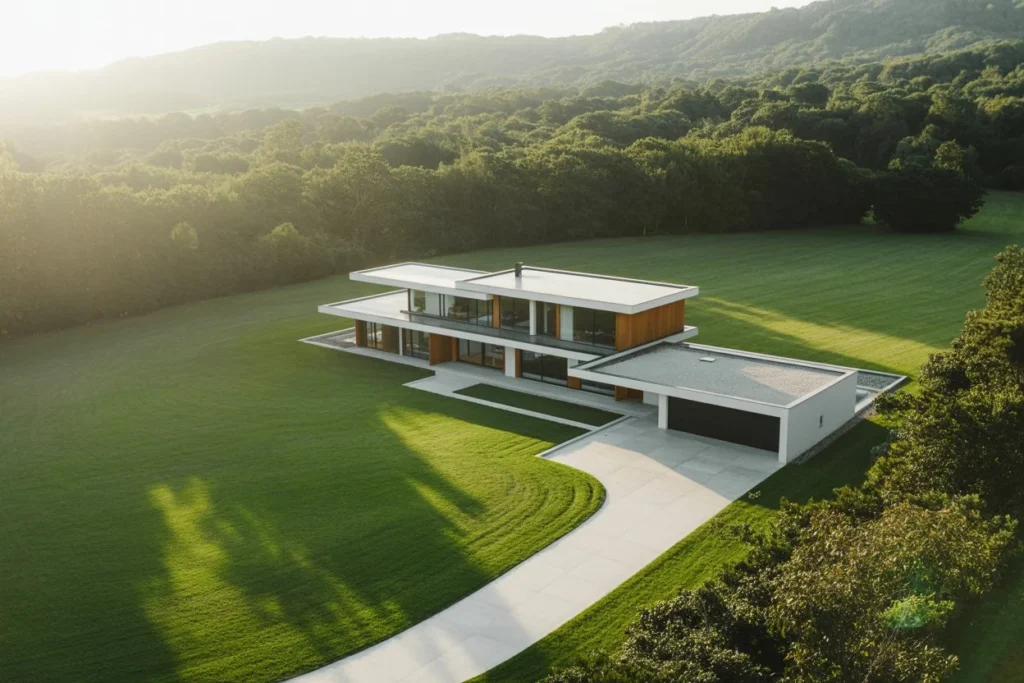
Photorealistic Bird’s Eye Renders for Architecture and Real Estate

RenderLand delivers studio-quality aerial 3D renderings for architects, real estate developers, urban planners, and property marketing teams across the United States.

From pre-construction master plans to investor-ready site overviews, our aerial visualization services communicate scale, context, and design intent with photorealistic clarity.

What is 3D Aerial View Rendering?

It is a computer-generated image produced from an elevated camera position above a site or building. Unlike drone photography, aerial 3D rendering can depict projects that do not yet exist, making it an essential tool for pre-construction communication, planning approvals, and marketing campaigns.

500+
Aerial Projects Delivered
50+
US States Served
98%
Client Satisfaction Rate
72hr
Average Turnaround
Contact Section
Send us a message

Let's start a
conversation

    ?
    Available now

    Prefer to
    talk directly?

    Our experts are on hand to answer your questions and guide you to the right solution. No hold music, no bots.

    Call us now +1 (905) 519-7785
    Confidential & secure conversations
    Response within 1 business day
    Free initial consultation
    Aerial Rendering Explained

    What Is 3D Aerial View Rendering?

    A 3D aerial view rendering is a photorealistic, computer-generated image that shows a building or site from above. The camera is placed at an elevated position, anywhere from a low drone-style angle to a wide high-altitude perspective, and the result looks like a professional photograph. Except it is not a photograph. It is a fully digital creation built from your architectural drawings and design files.

    This distinction matters. Drone photography requires a finished structure. Aerial CGI does not. You can show a mixed-use development, a residential community, or a 50-acre master plan in photorealistic detail before a single foundation has been poured.

    Many clients ask: “How is aerial rendering different from drone footage?”

    Drone Footage

    Drone footage captures what already exists. It reflects the current condition of a site on a specific day, in specific weather, with whatever landscaping is actually there.

    Aerial CGI

    Aerial CGI reflects your design intent. You control the lighting, the season, the surrounding context, and every detail of the finished development. That level of control is not possible with a camera attached to a drone.

    Types of Aerial Views RenderLand Produces

    We produce a full range of aerial perspectives depending on your project needs.

    01
    True Overhead (Orthographic Plan View)

    The camera looks straight down with no perspective distortion. This view works well for zoning board submissions and site plan presentations where accurate layout is the priority.

    02
    Angled Bird’s Eye (Perspective Aerial)

    The camera sits at a 45 to 60 degree angle. This is the most commonly requested aerial style because it shows both the roofline and the surrounding landscape in a single compelling frame.

    03
    Low-Altitude Perspective

    A drone-style angle that stays close to the building, showing facade detail and roofline character while still providing elevated context.

    04
    High-Altitude Context View

    A wide view that places the development within its neighborhood, urban grid, or natural landscape. Ideal for master plans and large-scale projects.

    05
    Phased Development Overlay

    Multiple renders showing different stages of a development from the air, used to communicate a multi-year build program to investors or planning authorities.

    Project Types

    What Can Be Visualized from Above

    Almost any project type benefits from an aerial perspective. We have produced aerials for residential communities, commercial campuses, mixed-use urban blocks, resort and hospitality properties, industrial logistics parks, university campuses, and large township master plans. If your project occupies land and has a relationship with its surroundings, an aerial rendering tells that story better than any floor plan or facade elevation can.

    Residential Communities Commercial Campuses Mixed-Use Urban Blocks Resort & Hospitality Industrial Logistics Parks University Campuses Township Master Plans
    Aerial Visualization

    Why Aerial Visualization Matters in Architecture and Real Estate

    Most people who make decisions about your project are not architects. Investors, planning board members, local residents, homebuyers, and media professionals read images, not drawings. A 2D site plan tells an expert audience what a development contains. A photorealistic aerial rendering tells everyone what a development feels like and how it fits into its context.

    That difference has real commercial value.

    The Communication Gap in Pre-Construction Projects

    Consider two scenarios. In the first, a developer presents a 120-unit mixed-use project to a city planning board using CAD drawings, topographic maps, and a PDF floor plan package. In the second, the same developer opens a presentation with a photorealistic aerial rendering.

    Scenario One

    A developer presents a 120-unit mixed-use project to a city planning board using CAD drawings, topographic maps, and a PDF floor plan package. Board members struggle to understand the massing, the relationship to neighboring streets, and what the roofscape will look like from the residential areas nearby. The meeting runs long. Objections multiply. The vote is deferred.

    Vote deferred. Objections multiply. Meeting runs long.
    Scenario Two

    The same developer opens a presentation with a photorealistic aerial rendering. The board immediately grasps the scale, the site relationship, and the landscape treatment. Questions become more specific and productive. Approval moves forward.

    Approval moves forward. Questions become productive.

    Aerial 3D rendering bridges the gap between technical documentation and human understanding. It is not a luxury for big-budget projects. It is a practical communication tool that reduces friction at every stage of project development.

    Why a Drone Cannot Replace 3D Aerial CGI

    Drone photography has its place in real estate marketing. But it cannot do what aerial CGI does.

    01

    Pre-construction projects have no physical structure to photograph.

    02

    Drone footage reflects reality, not design intent. A bare construction site is not a selling image.

    03

    CGI allows for idealized daylight, perfect weather, and fully realized landscaping regardless of what is actually on the ground.

    04

    3D renders can be updated quickly when design revisions occur. Drone footage cannot be reshot to show a building that changed.

    05

    Aerial CGI can show phased development across multiple time horizons in a single project delivery.

    For any project that has not been built, aerial CGI is not an alternative to drone photography. It is the only option.

    Business Impact: Where Aerial Renders Drive Real ROI

    Aerial renderings are not marketing expenses. They are revenue-generating assets.

    Investor Presentations and Capital Raises

    High-quality aerials anchor pitch decks and investment memoranda. They signal that a developer is serious, prepared, and capable of delivering.

    Off-Plan Pre-Sales

    Buyers purchase faster when they can spatially understand the full development. An aerial render makes a site plan feel real and livable.

    Planning and Zoning Approvals

    Boards approve projects more confidently when the context is clear. Less ambiguity means fewer delays.

    Marketing and Press Releases

    Aerial renders become the hero image in media coverage, brochures, billboard campaigns, and social media posts.

    Project Websites and Microsites

    An aerial is often the first full-site image a potential buyer or tenant encounters online.

    Aerial Rendering Process

    RenderLand's Aerial Rendering Workflow

    Our process is built around two priorities: accuracy and clear communication. Every project follows a structured workflow so you always know where things stand and what comes next.

    Step 01: Brief and File Intake

    You provide your CAD files, BIM models, site plans, GIS data, reference images, and any mood board or precedent imagery that captures the look you want. We review everything, confirm the scope, agree on camera angles, and set a realistic turnaround timeline before any work begins.

    Step 02: 3D Base Model

    Our team builds the terrain from topographic data and models all building massing and structures to accurate dimensions from your drawings. We work directly from standard architectural file formats; you do not need to prepare anything special.

    Step 03: Environment Build

    Surrounding context is added to the scene: streets, vegetation, neighboring buildings, water features, and landscape elements that make the aerial view spatially believable. The goal is not to recreate every adjacent building in full detail. It is to provide enough context that your development reads clearly within its real-world setting.

    Step 04: Camera and Lighting Setup

    The aerial camera is positioned at the agreed altitude and angle. We configure an HDRI sky environment, set the sun position for the correct time of day and geographic location, and establish the lighting atmosphere, whether that is a crisp midday sun, a warm golden hour, or a soft overcast sky.

    Step 05: Texturing and Materials

    High-resolution physically-based rendering (PBR) materials are applied across all surfaces. At aerial scale, textures need to work differently than they do in a close-up exterior render. Roofing, paving, landscaping, water, and terrain all get materials calibrated for the viewing distance.

    Step 06: Draft Render and Review

    We deliver a lower-resolution draft render for your approval before committing to final production rendering. This is where you confirm that the angle, composition, context, and material direction are right. Any adjustments are made here, not after the final render is delivered.

    Step 07: Final High-Resolution Render

    The production render is delivered at 4K to 8K resolution using industry-leading render engines. Multiple render passes are combined in post-production compositing to produce the final image.

    Step 08: Post-Processing and Delivery

    Color grading, atmospheric haze, depth of field, and entourage elements, people, vehicles, boats, aircraft if needed, are composited into the final image. We deliver your files in agreed formats: PNG, TIFF, print-ready PDF, or any other format your production team requires.

    File Formats Accepted

    We work with all standard architectural file formats.

    AutoCAD (.dwg, .dxf) For 2D site plans and floor plans
    Revit / BIM (.rvt) For full building information models
    SketchUp (.skp) For concept massing models
    Rhino 3D (.3dm) For parametric and complex geometry
    PDF & Sketches Site plans and hand-drawn sketches as reference material
    GIS & Topographic Data For accurate terrain modeling
    If you are unsure whether your files are usable, just reach out. We have worked with everything from polished BIM models to hand-sketched site plans, and we will tell you exactly what we can do with what you have.

    Revision Policy and Collaboration

    All standard projects include two rounds of revision. Feedback is submitted via image markup, written notes, or a short video call, whichever is easiest for your team. If design changes happen mid-project, we handle them transparently. No surprise billing. No guesswork about what is included.

    2 Revision Rounds Included No Surprise Billing Transparent Process

    Turnaround Time and Rush Delivery

    A standard single aerial still takes 5 to 8 business days from approved brief. A complex master plan with multiple angles typically takes 10 to 15 business days. Rush delivery is available for presentation deadlines and campaign launches. We have never sacrificed output quality to hit a deadline, and we will tell you upfront if a timeline is not achievable.

    5–8 Days Standard 10–15 Days Complex Rush Delivery Available

    Ready to Start Your Aerial Rendering Project?

    Share your files and project brief. We will review everything and confirm the scope, timeline, and what we can deliver before any work begins.

    Project Categories

    Types of Projects We Support

    Our team has delivered aerial visualization across virtually every project category in the US market. Here is how we approach the most common ones.

    02 — Commercial

    Commercial and Mixed-Use Developments

    Commercial office parks, retail centers, transit-oriented developments, and mixed-use urban blocks require a visualization that shows the relationship between different uses and the surrounding urban fabric. An aerial render communicates how pedestrian flow, parking, landscaping, and building massing work together, something no facade elevation can do.

    03 — Hospitality

    Hospitality, Resort, and Leisure

    Resort and hospitality projects sell setting as much as architecture. An aerial rendering shows pools, water features, beach access, landscaping treatment, and building arrangements across a large site in a way that communicates the guest experience before a single room is built. For destination properties, this is often the most important marketing image produced for the project.

    04 — Campus

    Campus and Institutional Projects

    University campuses, corporate headquarters, medical campuses, and government facilities involve large, complex multi-building sites where context and connectivity are as important as individual building design. Aerial rendering gives planners and stakeholders a clear picture of how the full campus functions as a system.

    05 — Industrial

    Industrial and Logistics Parks

    Warehouse parks, distribution centers, and manufacturing campuses need to communicate site efficiency, access routes, loading configurations, and proximity to transportation infrastructure. Aerial renderings make these operational qualities visible to tenants, investors, and planning authorities.

    06 — Urban Planning

    Urban Planning and Infrastructure

    Municipal projects, transit corridors, waterfront redevelopments, and large-scale master plans submitted to planning authorities all benefit from aerial visualization. We also produce shadow studies, massing analysis renders, and phased development visuals for multi-year planning documents.

    Pipeline & Specs

    Technical Capabilities and Rendering Features

    Our rendering pipeline is built to meet the demands of sophisticated architectural clients. Here is what that means in practice.

    01 — Camera Camera and Perspective Control

    Every camera setting in a 3D aerial render is fully controllable. We set altitude, field of view, focal length, pitch angle, and rotation to match your preferred perspective. Most clients share a Google Earth screenshot or a drone reference image to communicate the exact look they want. From a single 3D scene, we can produce multiple camera angle variations at no additional modeling cost, a significant value for projects that need aerials for multiple marketing uses.

    • Orthographic overhead for zoning board submissions
    • Angled bird's eye at 45 to 65 degrees for marketing
    • Low-altitude drone-style perspectives
    • Multiple angles from one model with no extra modeling fee
    02 — Lighting Lighting and Atmosphere

    We use HDRI-based sky environments with physically accurate sun positioning calibrated to the real geographic location of your site. That means the shadows fall correctly for New York City or Los Angeles or Miami, not a generic approximation. We also offer seasonal variation (spring, summer, fall, winter) and atmospheric conditions including golden hour, midday brightness, and soft overcast skies.

    03 — Context Context and Entourage

    Surrounding context is built from a combination of GIS data, aerial reference imagery, and our modeling team's judgment about appropriate detail levels. Neighboring buildings, streets, trees, water, people, and vehicles are all incorporated at a scale and detail level appropriate for aerial viewing. The result is a scene that reads as a real place, not a building floating in empty space.

    04 — Output Output Resolution and Formats
    Standard Outputs
    4K (3840 x 2160px)
    8K (7680 x 4320px)
    A0 print-ready at 300 DPI
    Custom aspect ratios
    16-bit color depth
    sRGB / Adobe RGB color profiles
    Available Formats
    PNG (transparent background)
    TIFF (uncompressed)
    Print-ready PDF
    PSD layered source file
    JPG web-optimized versions
    RAW render passes (on request)
    05 — Phasing Phased Development and Design Variation Overlays

    For master plan projects, we can produce multiple renders showing different development phases, design alternatives, or planning scenarios from the same base model. This means you are not starting from scratch each time a scenario changes, you are working from a shared 3D asset that generates additional outputs efficiently.

    Why Work With Us

    Benefits for Architects, Developers, and Designers

    Built For

    For Architects and Design Firms

    5 key advantages
    for your practice
    • Win more proposals with visually compelling competition entries and client presentations
    • Communicate site strategy and massing decisions to non-technical stakeholders clearly
    • Generate planning board submissions that meet regulatory visualization requirements
    • Show design intent before construction begins, reducing costly misunderstandings
    • Differentiate your firm with imagery that reflects the ambition of your work
    Built For

    For Real Estate Developers

    5 key advantages
    for your projects
    • Launch pre-sales campaigns before ground is broken
    • Attract institutional investors with professional aerial visuals in investment memoranda
    • Accelerate planning and zoning approvals with crystal-clear site context submissions
    • Create marketing assets that work across brochures, project websites, and social media campaigns
    • Visualize large master plan sites that no single photograph could capture
    Built For

    For Property Marketing Agencies

    4 key advantages
    for your agency
    • Receive client-ready, print-quality imagery without managing a 3D studio in-house
    • Fast turnaround timelines that fit campaign launches and media deadlines
    • Consistent visual style across all project marketing materials
    • Scalable output: one aerial model can generate many image variations for different uses
    Built For

    For Urban Planners and Government Agencies

    4 key advantages
    for public sector work
    • Present complex planning scenarios to public stakeholders in an accessible format
    • Produce shadow studies and massing analysis renders for planning applications
    • Overlay proposed and existing conditions for a clear before-and-after comparison
    • Create phased implementation visuals for multi-year planning documents
    Who We Work With

    Industries and Client Types We Serve

    From boutique studios to large national developers, RenderLand delivers precision-grade visualization across every sector of the American built environment.

    Client Sector
    Primary Use Case
    • 01
      Real Estate Developers (Residential and Commercial)
      Pre-sales, investor decks, marketing launches
    • 02
      Architecture and Design Firms
      Competition entries, client proposals, planning submittals
    • 03
      Urban Planning Consultants
      Master plan submissions, public consultation materials
    • 04
      Landscape Architecture Studios
      Site context and landscape strategy visualization
    • 05
      Property Marketing and PR Agencies
      Off-plan campaigns, brochures, digital advertising
    • 06
      Government and Municipal Authorities
      Zoning boards, public meetings, infrastructure projects
    • 07
      Investment and Private Equity Firms
      Investment memoranda, due diligence visuals
    • 08
      Hospitality and Resort Developers
      Destination property marketing, site overview imagery
    • 09
      Industrial and Logistics Park Developers
      Campus overviews, site efficiency visualization
    • 10
      Mixed-Use Transit-Oriented Developers
      Urban block studies, master plan visualization

    RenderLand works with clients of all sizes, from boutique architecture studios to large national real estate groups. We have delivered aerial visualization for projects in every corner of the United States, and our process works equally well whether you are in a major market like New York, Los Angeles, or Chicago, or developing a project in a smaller city or rural location.

    10+ Client Sectors Served
    50+ US Markets Covered
    All Project Scales Welcome
    Contact Section
    Send us a message

    Let's start a
    conversation

      ?
      Available now

      Prefer to
      talk directly?

      Our experts are on hand to answer your questions and guide you to the right solution. No hold music, no bots.

      Call us now +1 (905) 519-7785
      Confidential & secure conversations
      Response within 1 business day
      Free initial consultation
      Client Challenges

      Common Problems We Solve

      You may recognize one or more of these situations.

      Our 2D site plan failed to impress the board, they could not visualize the scale.

      We cannot fly a drone over a site that has not been built yet.

      Our previous studio could not handle a 50-acre master plan.

      We need 4K print-ready aerials for a brochure launch in 6 days.

      The zoning board rejected our application because the context was unclear.

      Our investor deck looks weak compared to our competitors.

      We updated the design three times and our renders were already outdated.

      We have no budget for a physical scale model but need something impressive for launch.

      These are real problems we hear from clients every week. Here is how we address them.

      The Planning Board Problem

      The planning board problem is one of the most costly in real estate development. A deferred vote can set a project back by months. When a board cannot clearly understand what a development will look like, their instinct is to pause. A photorealistic aerial render removes that ambiguity. It shows massing, context, landscaping, and street relationship in a format that any audience can read. Boards that see clearly tend to vote faster.

      The Pre-Construction Photography Problem

      The pre-construction photography problem is fundamental. If your project does not exist yet, you cannot photograph it. But you can render it. We work from your drawings and BIM files to produce aerial images that are indistinguishable from professional photography, showing the finished development exactly as you intend it to be built, in perfect lighting, with fully realized landscaping and context.

      Large Master Plan Sites

      Large master plan sites present a different challenge. Not every visualization studio has the pipeline to handle a complex 50 to 100-acre project. We have purpose-built workflows for large sites, including terrain modeling from GIS data, modular context building, and efficient production of multiple camera angles from a single scene.

      Tight Deadlines

      Tight deadlines are a reality in this industry. If you have a presentation in six days, tell us upfront. We have rush delivery workflows that protect quality while hitting tight timelines. We will be honest with you if a timeline is not achievable. We will never deliver a sub-standard render just to say we delivered on time.

      Our Difference

      Why Clients Choose RenderLand

      Studio-Grade Output at Every Scale

      Whether you are working on a six-unit townhouse development or a 200-acre township master plan, every project receives the same level of care and technical rigor. Our rendering pipeline uses the same production engines trusted by the world's leading architectural visualization studios, and our quality review process applies to every deliverable regardless of project size.

      Accurate Modeling from Any File Format

      You do not need to prepare special files before reaching out. We work directly from AutoCAD drawings, Revit models, SketchUp files, Rhino geometry, PDF site plans, and GIS terrain data. This reduces your team's workload and lets us start production faster. If something is missing from your package, we will tell you exactly what we need and why.

      Transparent Process and Predictable Timelines

      We operate on a milestone-based project structure. You receive a draft render for approval before we commit to final production. Revision windows are defined upfront. Deadline commitments are made in writing. You will never receive a surprise invoice or find out about a delay after it has already happened.

      US-Based Communication and Support

      Our project management team is based in the United States and operates in US time zones. We understand American real estate markets, planning approval processes, and the expectations of US-based investors and marketing agencies. This is a meaningful advantage over offshore studios that require overnight communication cycles and may not understand the specific documentation standards that US planning authorities expect.

      Track Record

      Proven Results Across the US Market

      We have delivered aerial visualization for residential communities, mixed-use urban projects, hospitality developments, industrial campuses, and government infrastructure programs across the United States.

      Residential Communities Mixed-Use Urban Hospitality Industrial Campuses Government Infrastructure
      Practical Impact

      How Aerial Visualization Improves Approvals and Marketing

      Planning & Zoning

      Accelerating Planning and Zoning Approvals

      Planning and zoning boards across the US increasingly expect high-quality visualization as part of project submissions. An aerial render that clearly shows massing, shadow impact, landscape treatment, and neighborhood context reduces ambiguity and gives boards the information they need to make a confident decision. We have produced shadow studies and massing analysis renders for planning submissions in dozens of US municipalities, and we understand what these boards typically need to see.

      Pre-Sales

      Powering Off-Plan Pre-Sales Campaigns

      Aerial renders are the most used image type in off-plan residential marketing. They anchor project websites, real estate listing portals, print brochures, billboard campaigns, and digital advertising. A strong aerial is often the first visual impression a potential buyer has of a development, and first impressions drive inquiries. We produce aerials that are built for this purpose: compelling at thumbnail size, full of detail at full resolution, and technically prepared for both digital and print production.

      Investor Relations

      Elevating Investor Relations Materials

      When institutional and private investors review a project, they are evaluating the quality and credibility of the developer as much as the development itself. High-quality aerial CGI in an investment memorandum or LP presentation communicates that you are a serious operator. It shows the project in context, communicates scale, and makes the investment thesis visible in a way that written descriptions and financial models cannot. This matters more than most developers realize.

      Press & Media

      Content for Press and Media Campaigns

      Architecture publications, real estate media, and trade press all favor visual-first stories. An aerial rendering is the standard hero image for a project announcement press release. It is also among the most shared content types on social media and digital platforms. A single strong aerial can generate earned media coverage, social engagement, and brand awareness that no paid advertising budget could replicate.

      Production Stack

      Rendering Software and Technology

      RenderLand uses the same production software trusted by the world's leading architectural visualization studios. Our technology stack covers every stage of the pipeline.

      Software
      Category
      How We Use It
      • 01
        3ds Max
        3D Modeling
        Primary modeling environment for all building geometry, site construction, and scene assembly
      • 02
        V-Ray
        Render Engine
        Production-grade photorealistic rendering for final high-resolution still output
      • 03
        Corona Renderer
        Render Engine
        Unbiased rendering for complex lighting scenarios and aerials requiring fine material detail
      • 04
        Lumion
        Real-Time Render
        Fast visualization and atmospheric environment generation for draft-stage approvals
      • 05
        Twinmotion / UE5
        Real-Time / VR
        Real-time aerial visualizations and interactive flyover experiences for VR presentations
      • 06
        Revit / BIM
        Architectural Data
        Direct import of BIM models for geometry accuracy and automated model conversion
      • 07
        SketchUp
        Concept Modeling
        Early-stage massing studies and concept model import from design teams
      • 08
        Rhino 3D
        Parametric Design
        Complex geometry and parametric architecture visualization
      • 09
        Blender
        Open-Source 3D
        Supplementary modeling, particle systems, and vegetation generation
      • 10
        GIS / ArcGIS
        Terrain Data
        Accurate terrain modeling from topographic and geographic datasets
      • 11
        Photoshop CC
        Post-Production
        Final compositing, color grading, entourage layering, and atmospheric effects
      • 12
        Enscape
        Plugin Renderer
        Real-time rendering within Revit and SketchUp for rapid visualization

      Clients often search specifically for studios that use V-Ray for final production output, Lumion or Twinmotion for fast real-time visualization, or Revit-compatible workflows that eliminate the need for manual model conversion. Our pipeline supports all of these. If your project was designed in Revit, we import it directly. If your design team works in SketchUp or Rhino, we work with those files as well. We do not ask clients to change their design tools to work with us.

      Got Questions

      Frequently Asked Questions

      • 3D aerial view rendering is a photorealistic, computer-generated image produced from an elevated camera position above a building or site. Unlike drone photography, it does not require a finished structure. Aerial CGI is built from your architectural drawings and site plans, which means it can depict a development years before construction begins. Drone photography captures what is physically on the ground on a specific day, including bare earth, construction fencing, and whatever the weather happens to be. Aerial CGI shows your design as you intend it to be built, with idealized lighting, full landscaping, and surrounding context modeled to match your vision.
      • We accept all standard architectural formats: AutoCAD (.dwg, .dxf), Revit (.rvt), SketchUp (.skp), Rhino 3D (.3dm), PDF site plans, and GIS or topographic data. If you only have a PDF site plan or a hand-drawn sketch, that is enough to get started. Do not let file format concerns stop you from reaching out. We will review what you have and tell you exactly what we can produce from it.
      • A standard single aerial still takes 5 to 8 business days from an approved project brief. A complex master plan with multiple camera angles typically takes 10 to 15 business days. All projects include a draft render at the midpoint for your review and approval before we move to final production. Rush delivery is available if you have a hard presentation or campaign deadline.
      • Pricing varies based on scene complexity, site area, number of camera angles, output resolution, and turnaround timeline. A simple single aerial for a smaller project will cost considerably less than a multi-angle master plan package for a 100-acre development. We provide a detailed custom quote for every project. What we can say is this: a high-quality aerial rendering that anchors a marketing campaign, secures investor funding, or accelerates a planning approval delivers returns that far exceed its production cost.
      • Yes, completely. Camera position is fully customizable. You specify the altitude, pitch angle, rotation, field of view, and focal length. Most clients share a Google Earth screenshot, a drone reference image, or a sketch to communicate the perspective they want. We can also produce multiple camera angles from the same 3D scene, which is an efficient way to cover different marketing and approval uses without building a new scene for each.
      • Yes. Context modeling is standard practice in all of our aerial projects. Surrounding buildings, streets, trees, vehicles, and topography are modeled or sourced from GIS data. The level of context detail is scaled to your project needs, a city block development gets more detailed surrounding context than a rural resort site might require. We discuss this during the brief stage so you know exactly what context will be included.
      • Yes. The same 3D scene used for your still aerial renders can be animated into a flyover video. Typical aerial flyover animations run 30 to 90 seconds and are delivered in MP4 or ProRes format. These videos are widely used in social media campaigns, investor presentations, project website headers, and real estate listing portals. We can discuss animation scope and pricing as part of your project brief.
      • Standard delivery includes 4K resolution stills (3840 x 2160px) for digital use, with 8K output available for large-format print production. File formats include PNG, TIFF, JPG, and print-ready PDF. We can also provide layered PSD source files and raw render passes for studios that want to handle their own final compositing. All files are delivered ready for immediate use in print production and digital campaigns.
      • Two rounds of revisions are included in standard project pricing. Feedback is submitted via image markup, written notes, or a brief video call. If significant design changes occur mid-project, we handle them with transparent pricing, no surprise invoices. We discuss the revision policy during onboarding so there are no ambiguities about what is included.
      • Yes. RenderLand works remotely with clients across all 50 states. All project management is handled digitally through a structured communication process. We have produced aerial renderings for projects in New York, Los Angeles, Miami, Chicago, Dallas, Houston, Seattle, Denver, Atlanta, and many other US markets. Location is not a barrier to working with us.
      Start Your Project

      Ready to See Your Project from Above?

      Get a photorealistic 3D aerial rendering that wins investors, accelerates approvals, and launches your marketing campaign, before construction begins.

      Delivered in 5 to 8 business days
      US-Based Studio
      Rush Delivery Available
      Two revision rounds included
      NDA available on request
      All standard file formats accepted
      Or Explore Our Work

      Or explore our portfolio. See what RenderLand has created for developers, architects, and planners just like you.

      View Our Portfolio
      Contact Section
      Send us a message

      Let's start a
      conversation

        ?
        Available now

        Prefer to
        talk directly?

        Our experts are on hand to answer your questions and guide you to the right solution. No hold music, no bots.

        Call us now +1 (905) 519-7785
        Confidential & secure conversations
        Response within 1 business day
        Free initial consultation